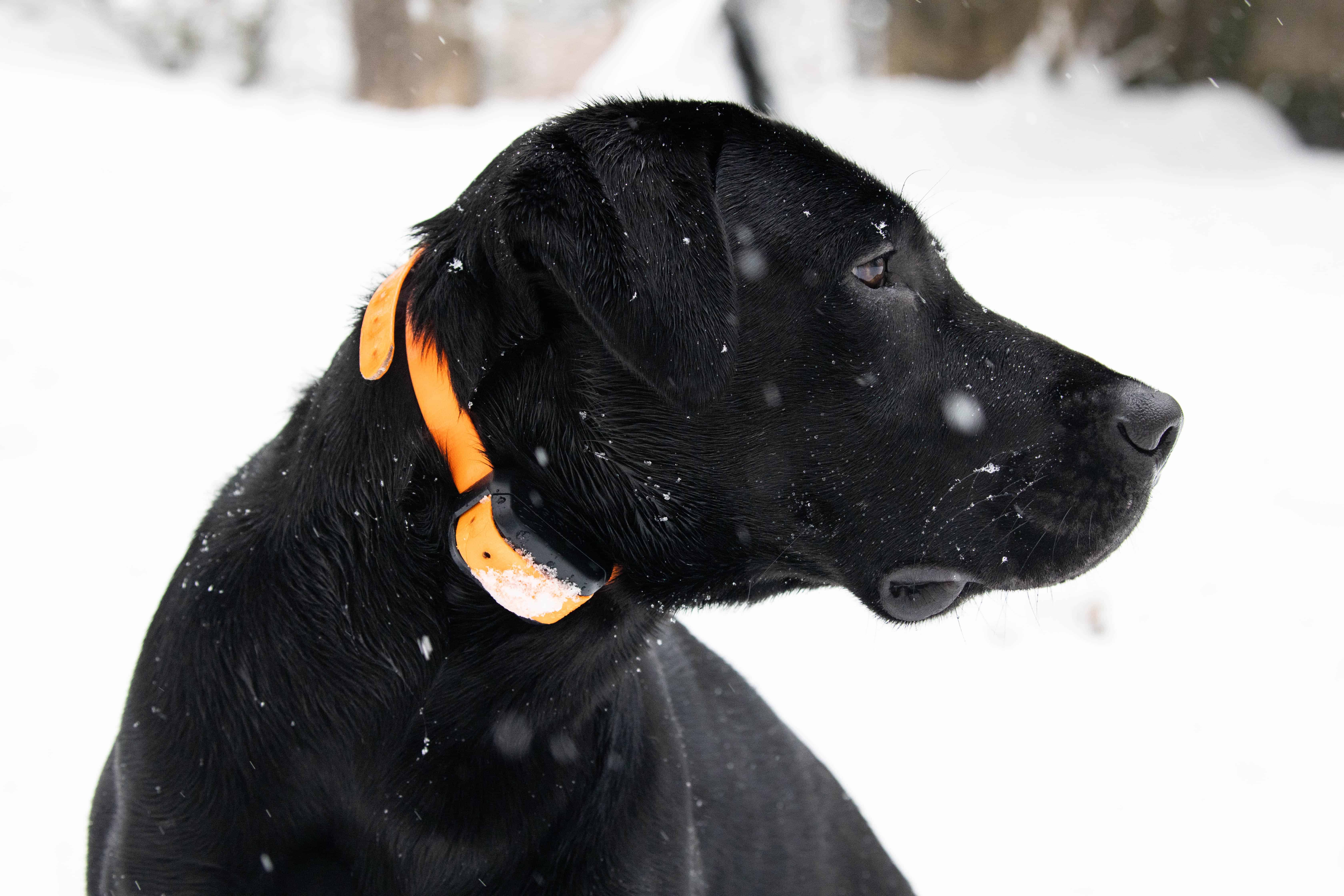
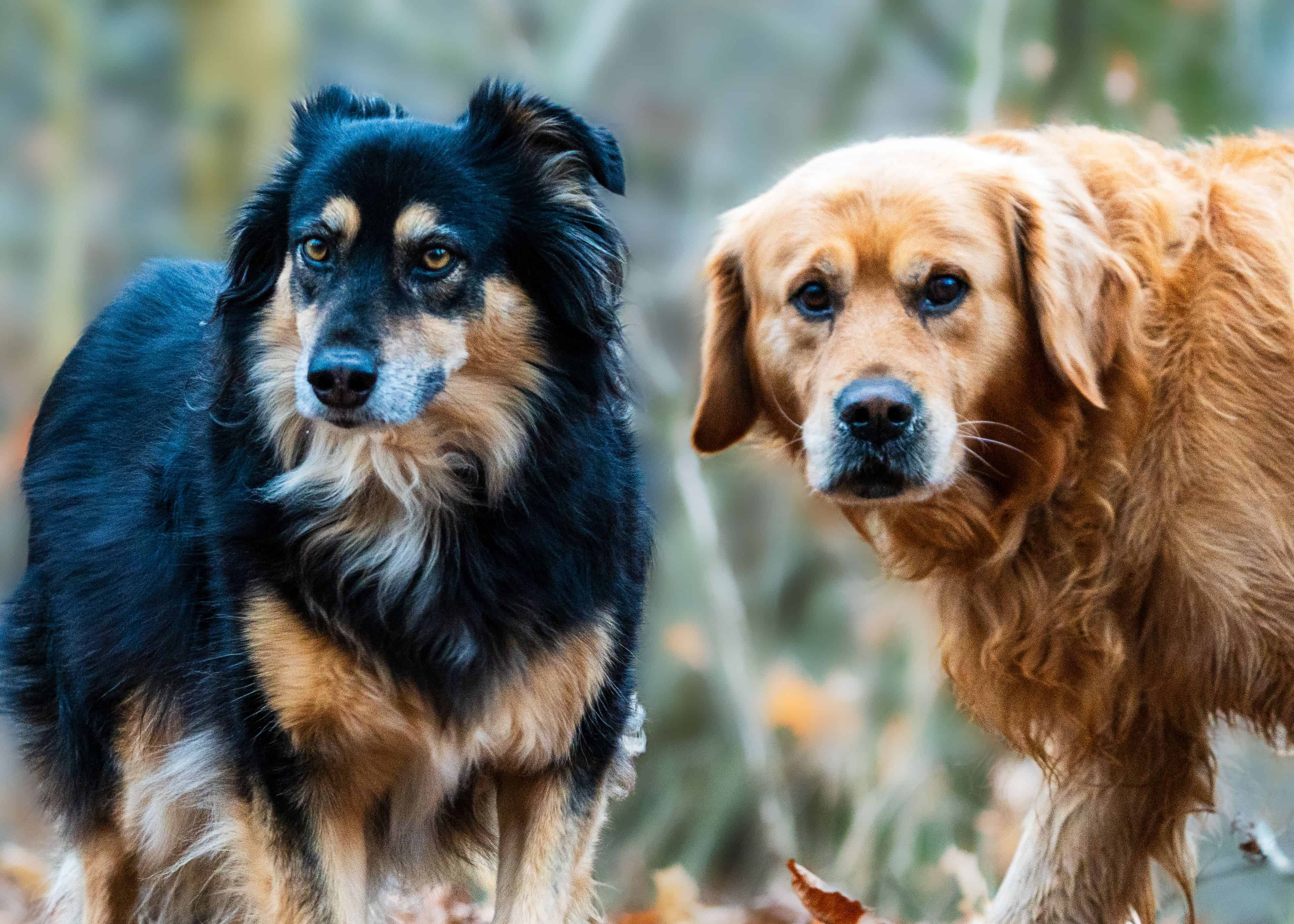
One of the biggest misconceptions many dog owners have is that a “well-socialized” dog should want to greet every single dog they see. In some ways, it’s an understandable assumption. As humans, we often enjoy meeting new people, making friends, and socializing in different settings. It’s easy to anthropomorphize & project those same expectations onto our dogs.
Additionally, culturally in the United States, the public perception of how we treat our pet dogs is different from other parts of the world. This extends to our dog’s interactions with both humans and other animals. There is almost an expectation – maybe even an entitlement – here in the U.S., where people expect to be able to allow their dog to interact with yours. Even the often-used, ”it’s fine, he’s friendly!” (regardless of if their dog is actually friendly or not) shows a lack of respect for your decision.
Expecting your dog to happily greet every dog they encounter is not only unrealistic, it can actually create frustration, conflict, and behavioral problems. In many cases, teaching your dog that they don’t need to interact with every dog they see is one of the most valuable skills you can develop.
What does socialization actually mean?
Many dog owners equate socialization with interaction. They assume that every walk should include meeting other dogs, every trip to the park should involve play, and every dog they encounter should become a new friend.
In reality, socialization is about learning to exist comfortably in the world, not constantly interacting with everything in it. A well-socialized dog should be able to calmly observe other dogs, ignore distractions when asked, remain relaxed around unfamiliar animals, and confidently navigate new environments. This is where it becomes vital to meld socialization with generalization – you can ensure that your dog performs reliably and comfortably in any number of situations.
Perhaps the key takeaway is that neutrality is often far more valuable than sociability. Ideally, your dog should be calm, composed and responsive regardless of the circumstances; you want your dog to look at a dog across the street as no more interesting than a piece of furniture. Even more importantly, if the dog across the street or behind a fence is screaming at your dog, you want your dog to emotionally regulate with self-control and absolutely refuse to engage or react to that dog.
Dogs are individuals
Just like people, dogs have individual personalities. You’ll no doubt have noticed that your dog’s personality differs from previous dogs you may have owned, or the dog owned by your neighbor. Some dogs genuinely enjoy meeting new dogs, while others prefer a smaller social circle. Some are naturally reserved, while others are highly social. Even highly social dogs may not take kindly to a dog who has bad manners, doesn’t respect boundaries, or is just looking for conflict.
It’s also unreasonable to assume that adult dogs will like puppies. Puppies don’t understand social cues and are just learning how to interact with dogs and understand boundaries. Some adult dogs may not have the patience and tolerance for that.
None of these personalities are inherently right or wrong. Just because a dog isn’t enthusiastically pulling at the end of the leash to greet every dog it sees, it doesn’t mean they aren’t social. After all, think about your own friendships. Most people don’t expect to become close friends with every person they meet. Instead, we naturally develop relationships with a relatively small number of people whose personalities complement our own. Dogs are no different. Every person is different, just like every dog is different. A dog pulling on the end of the leash because they actually want to gleefully meet another dog with all the friendliest intentions isn’t necessarily good either, because the other dog may not like that energy at all.
Many dogs are perfectly content having a few trusted canine companions rather than constantly meeting unfamiliar dogs, which can be overwhelming and overstimulating. Remember that dogs are descended from wolves; they generally live in small packs of 6-10 wolves, and they generally operate on hierarchy, cohesion and hunting coordination. By contrast, our closest living relative – the chimpanzee – lives in larger communities, with an average of 35-50 chimps that operate through forming complex alliances, gaining influence in other subgroups and social politics. Dogs have a smaller, tight knit group.
Even in a home setting, your dog does not have to be social and love the other family dog sitting across the room. However, if you’re a good dog handler through strong leadership, clear communication and a calm resolve, then humans of the household should be the unequivocal highest ranking members of the pack in the dog’s eyes. Being the highest ranking member, you can rule that it’s fine if one dog doesn’t absolutely love the dog sitting on the other side of the room. However, the other rule is that there will be peace in the house, no matter what. That’s my rule for clients who have two dogs who don’t necessarily get along. There will be no constant knockdown, drag out fights between dogs without consequences. Through strong leadership and management of a problem and mitigating certain variables, it can be made quite clear that there will be peace.
Every greeting carries risk
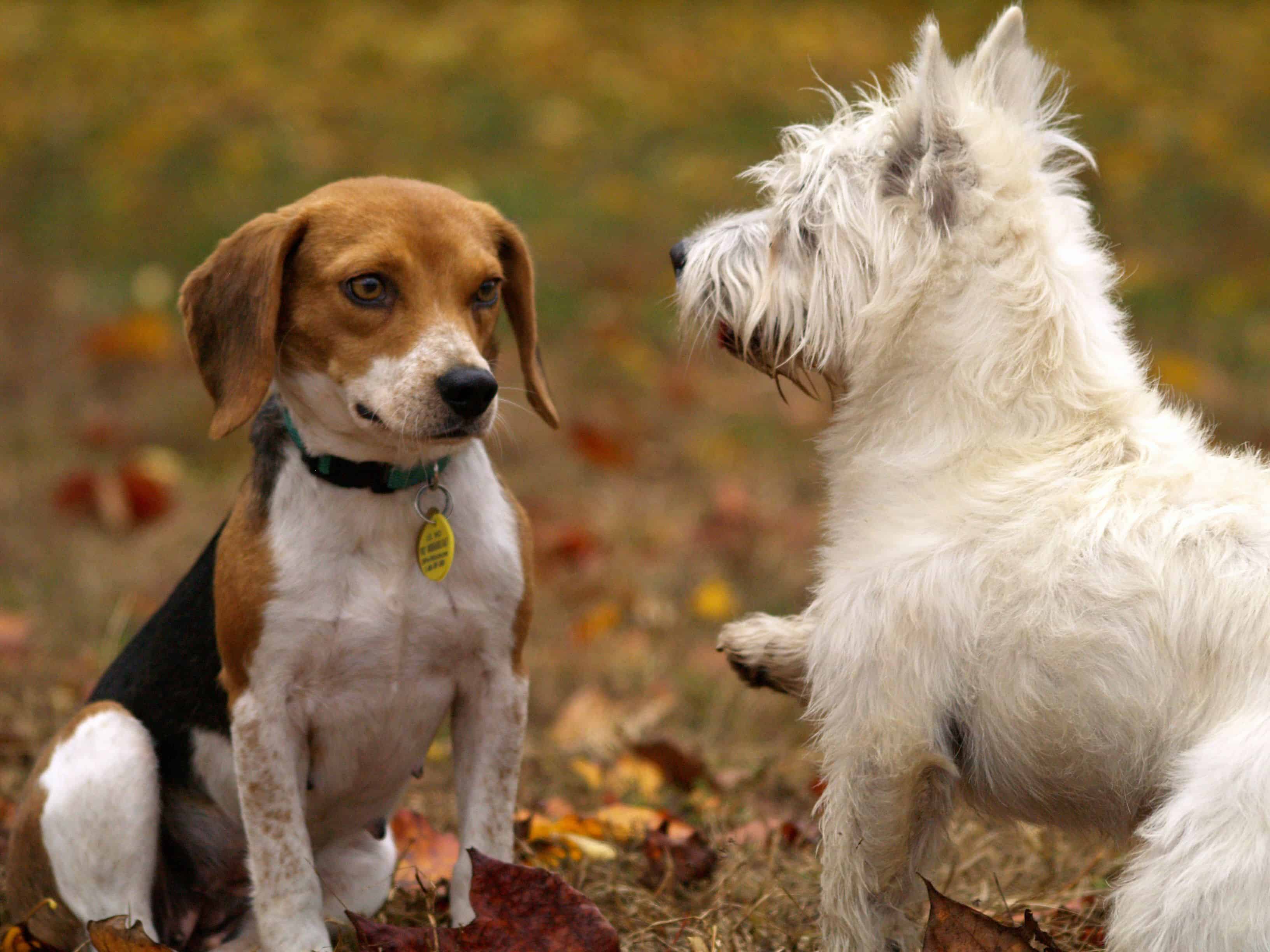
Whether we want to admit it or not, every time two unfamiliar dogs meet, there is some level of uncertainty. Even if both dogs appear friendly, you don’t know anything about the dog’s history. What are their social skills? How comfortable is the dog around other dogs? Have they had a violent interaction with another dog in their past? How do they respond under pressure? Are they overly possessive of toys? Do they like to bully other dogs? What is their health status?
A greeting that starts calmly can quickly become uncomfortable if one dog becomes overly excited, fearful, or pushy. Many leash reactivity cases actually begin because a dog has repeated bad experiences during on-leash greetings. There is a right way and a wrong way to introduce dogs. When dogs are restrained by leashes, they lose a lot of their ability to communicate naturally through movement and distance. This can create frustration or tension that would not exist in an off-leash setting. You add in opposition reflex and ratcheted tension, and it’s a recipe for a fight to pop off in a fraction of a second . Not every dog wants another dog rushing into their personal space. There is a methodical process to introduce dogs, and dog owners who are unsure should certainly reach out for instructions on how to do so effectively.
Dog parks aren't always the best teachers
We discussed in a prior article about the misconceptions of dog parks as a good place for socialization. While many owners believe dog parks are the ideal place for this activity, there are just so many risks attached to taking your dog to a dog park that it really makes little sense to just throw your dog in there and hope for the best – it is a complete lottery. You cannot accurately assess the energy levels, behavioral traits and other important factors that should be weighed up before you let your dog play with an unfamiliar dog.
Instead of learning calm social skills, some dogs learn to become overstimulated, while others develop anxiety after unpleasant encounters. It can actually cause more behavioral problems than it solves – quality social experiences almost always outweigh quantity. All it takes is a really bad experience with one dog for your dog to develop a behavioral problem with all dogs.
A small social circle is perfectly healthy
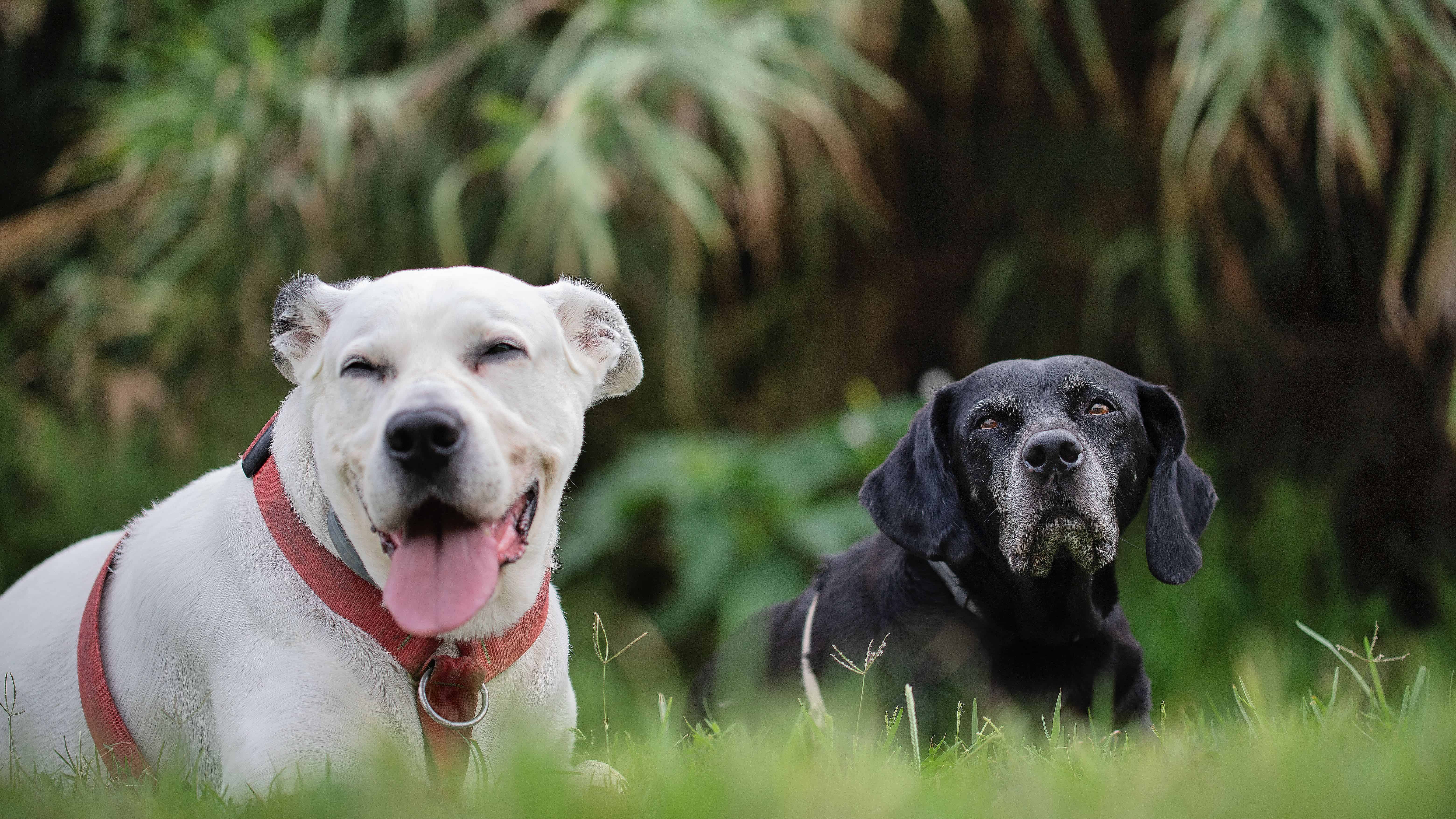
Rather than introducing your dog to dozens of unfamiliar dogs, consider helping them develop a small group of trusted canine companions. Introduce dogs one at a time in controlled environments where both dogs have the opportunity to interact calmly.
Over time, your dog builds confidence through predictable, positive experiences instead of constant novelty. Just as importantly, they learn that not every outing needs to include social interaction. Many dogs are happiest with just a few close canine friends. Some dogs really only need their human pack members and are perfectly happy with that. Some just want their immediate human pack members and the other family dogs. Just like with people, you have some people out there who are extroverts, and some folks who are introverts. There’s research out there to suggest that genetics account for roughly 40-60% of why individuals become introverted or extroverted, with environmental factors and upbringing accounting for the rest. What is important is that you don’t force something that is not innate in the dog’s personality to begin with. Just because you may be an extrovert does not mean that your dog is too.
Set your dog up for success with positive socialization
In this article, we’ve outlined what not to do in order to try and avoid negative experiences for your dog. You might be wondering how to ensure your dog is set up for success – and that success starts with you and your decision making about your dog.
You need to create an environment where your dog is confident but neutral. That means being very selective about when, where and how your pet interacts with other dogs. It also means choosing a playmate for your dog that has a compatible play style, a similar energy level, and few behavioral issues. To do this, it is better to have your pet meet up with familiar dogs – perhaps belonging to a friend or family member – because you will have a greater understanding of these variables.
It’s also important to note that not every meeting needs to result in play. Sometimes simply walking together at a comfortable distance is an excellent first step. By carefully selecting social opportunities, you dramatically increase the likelihood that your dog will build healthy relationships rather than stressful ones.
In conclusion
Dogs do not need dozens of canine friends to live happy, fulfilling lives. In fact, many dogs thrive when they are taught that they can calmly coexist with unfamiliar dogs without feeling the need to interact. Sometimes, the best social skill your dog can learn is simply walking past another dog without giving it a second thought.
The goal of socialization is not to create a dog that loves every dog they meet. The goal is to create a dog that can confidently and calmly navigate the world around them. At K9 Evolutions Dog Training, we encourage owners to focus less on quantity of socialization and more on quality. A small circle of trusted canine companions, combined with the ability to remain neutral around unfamiliar dogs, often creates a happier, more confident dog than one that feels obligated to greet every dog they encounter. If you need help improving your dog’s neutrality, contact us at info@k9evolutionsdogtraining.com or call (612) 227-7019.