Managing your dog around guests is an important part of being a responsible dog owner. Get this right, and your dog can have a harmonious relationship when friends and family come to visit; get this wrong, and it may reduce the amount that your dog can interact with visitors, or may even dissuade family and friends from visiting you because your dog is out-of-control to an annoying degree.
Firstly, it is important to emphasize that you should be managing your dog around your guests, and not the other way around. It’s not enough to just own a dog and keep them healthy and fed. Part of being a responsible dog owner is getting them trained properly. In addition, your dog could have excellent training, but that’s only part of the equation. If you’re not a good dog handler, the dog may know what they’re supposed to be doing, but they won’t have clear communication from good leadership.
Expecting your guests to change their behavior or simply put up with your dog’s behavior isn’t realistic, particularly if they aren’t dog people in the first place. A lot of folks won’t want to put up with the hassle and won’t have the heart to tell you why they don’t want to visit. Putting expectations on your dog will set clear boundaries for them, reduce your stress, and allow your visitors to hold conversations without having to worry about being bothered by your pup.
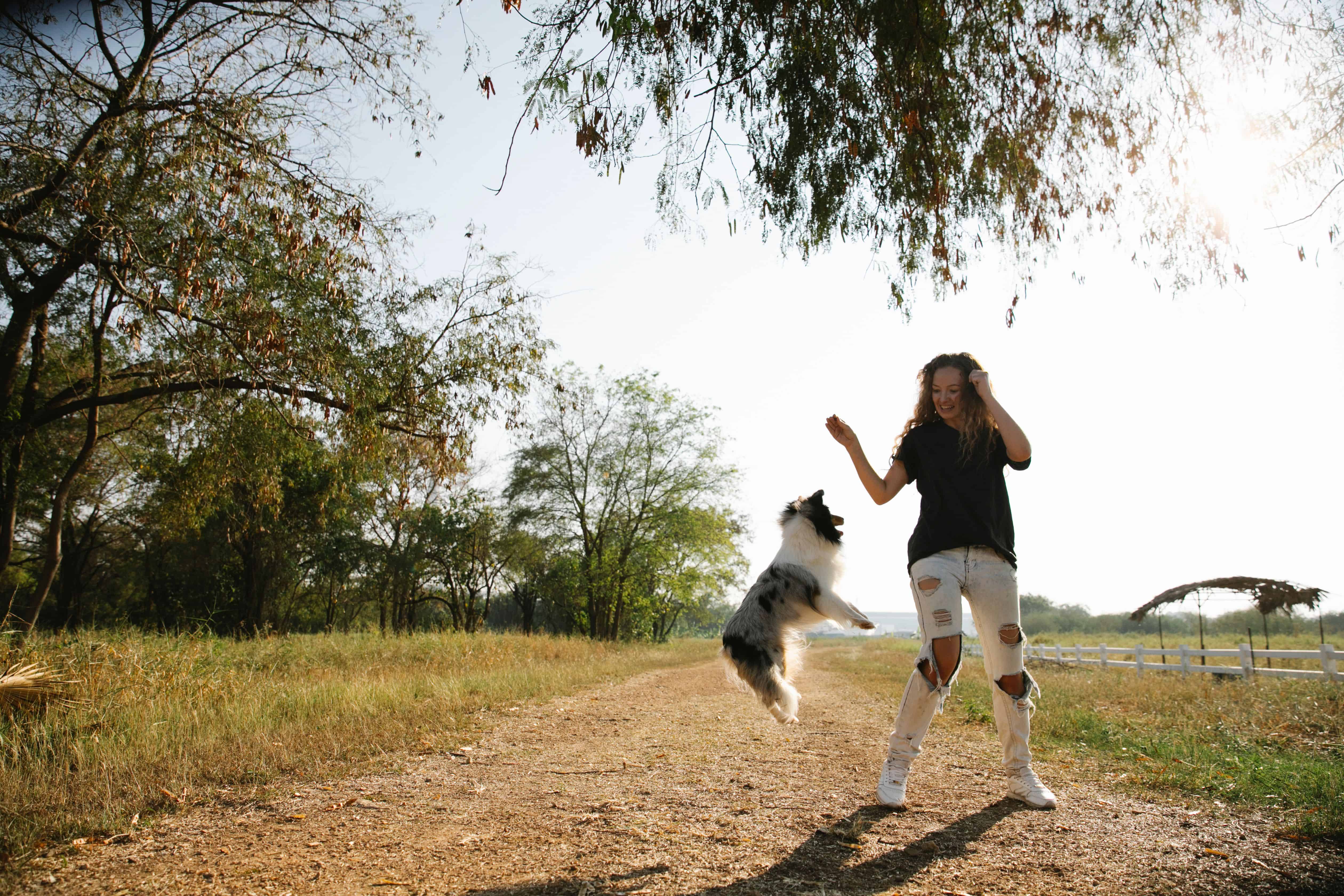
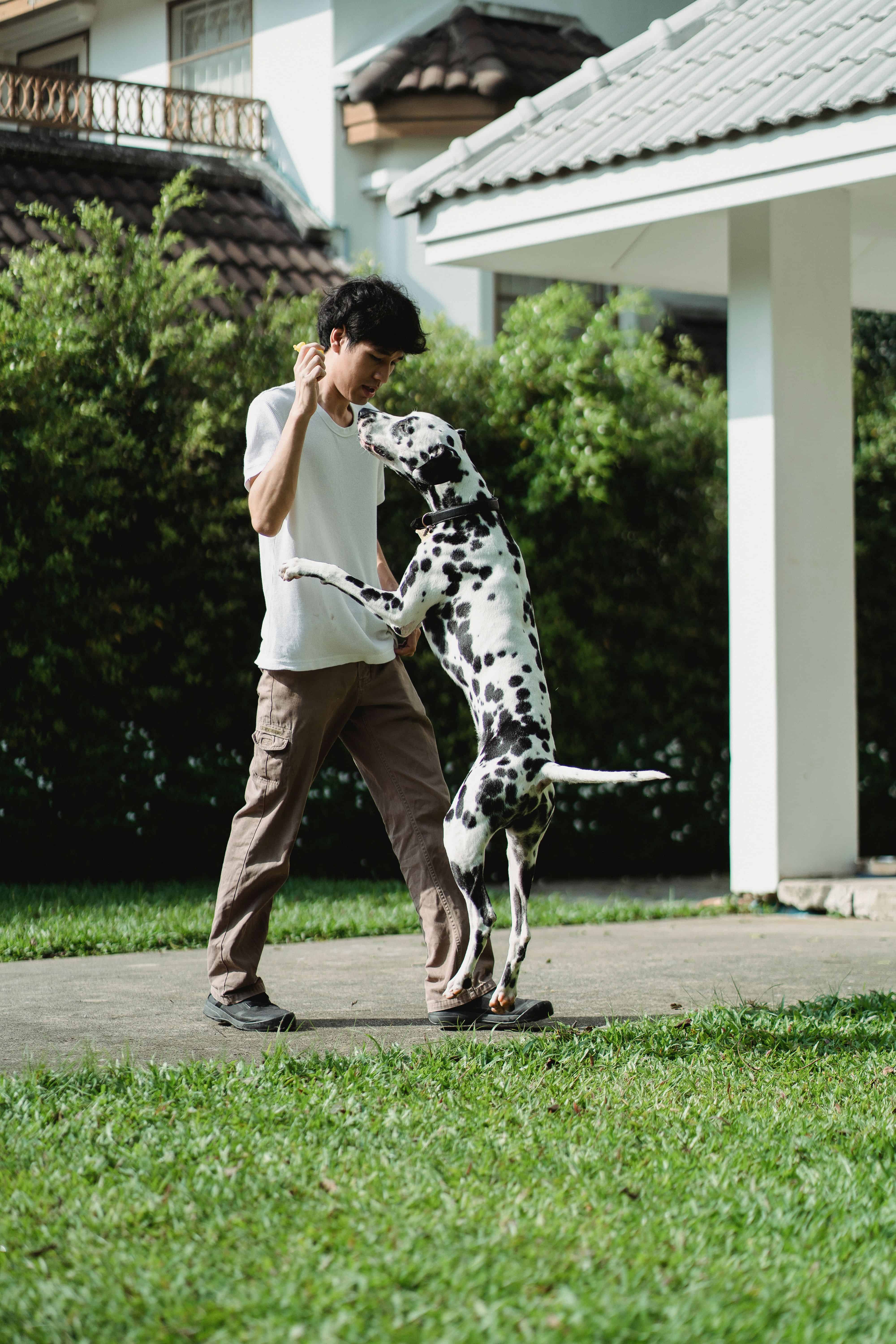
One of the most frustrating habits that dog owners can encounter is when their dog jumps on their guests. No matter how many times you tell the dog “Off!”, it seems inevitable that it will happen every time someone enters your home. The good news is that there is a better way to manage this behavior to reduce the likelihood of it happening.
In this article, we’ll explore why your dog jumps on your guests, the common mistakes that dog owners make, and the steps you can take to help rectify this.
Why do dogs jump on people?
Before we look at how to manage and resolve your dog’s jumping behavior, we’re going to look at some of the root causes. Unlike other behaviors, this isn’t something that canines have done for millennia; this is a behavior that has primarily developed since domestication. Here are some common reasons why your dog may be jumping on people:
- Excitement. Your dog may be simply so excited by the ritual of the doorbell ringing and new people coming through the door that they need a way to express their excitement. Their jumping is often accompanied by high-pitched whining, panting, or occasionally barking.
- Lack of impulse control. Particularly prevalent in younger puppies in the early phases of training, a lack of impulse control means that the dog simply cannot resist the urge to run towards the new person – even if they have been trained that it is an undesirable behavior.
- Attention-seeking. In this context, your dog doesn’t recognize the difference between ‘good’ attention and ‘bad’ attention – all they know is that when they jump, they get some form of attention for their behavior.
- Reinforcement history. This reinforcement is often unintentional, but visitors may be unwittingly contributing to the jumping problem. Positive body language signals such as smiling, petting the dog, or simply laughing off the behavior and saying “oh, isn’t he cute!” all help to reinforce the behavior.
- Under-socialized. If a dog is under-socialized – particularly around people – they may not understand the etiquette required when visitors arrive at your home. Exposing your dog to a variety of environments and people can help to build solid behaviors in different settings.
- Under-stimulated. If your dog is bored, the consequences can often manifest themselves when something ‘new’ occurs – this is because your dog is simply craving some kind of activity or interaction to break the boredom. Regular enrichment activities combined with physical activities can help to break this cycle of boredom.
- Height-seeking behavior. This form of jumping up on people can be a manifestation of a particular problematic behavior that can become quite concerning – where the dog is trying to get level with humans to gain direct eye contact, in the same way that dogs will sometimes greet each other with eye-to-eye intensity. Height-seeking behavior can be troubling if a dog already exhibits pushy behavior with other boundaries or aggressive behavior like resource guarding, or continually manipulating or dictating their environment to humans. This behavior can become escalatory where the dog is trying to assert social status.
Why jumping can be a problem
You may wonder if your dog’s jumping habit is actually a behavior that needs to be corrected. Sure, it’s a minor irritation, but is it really a problem?
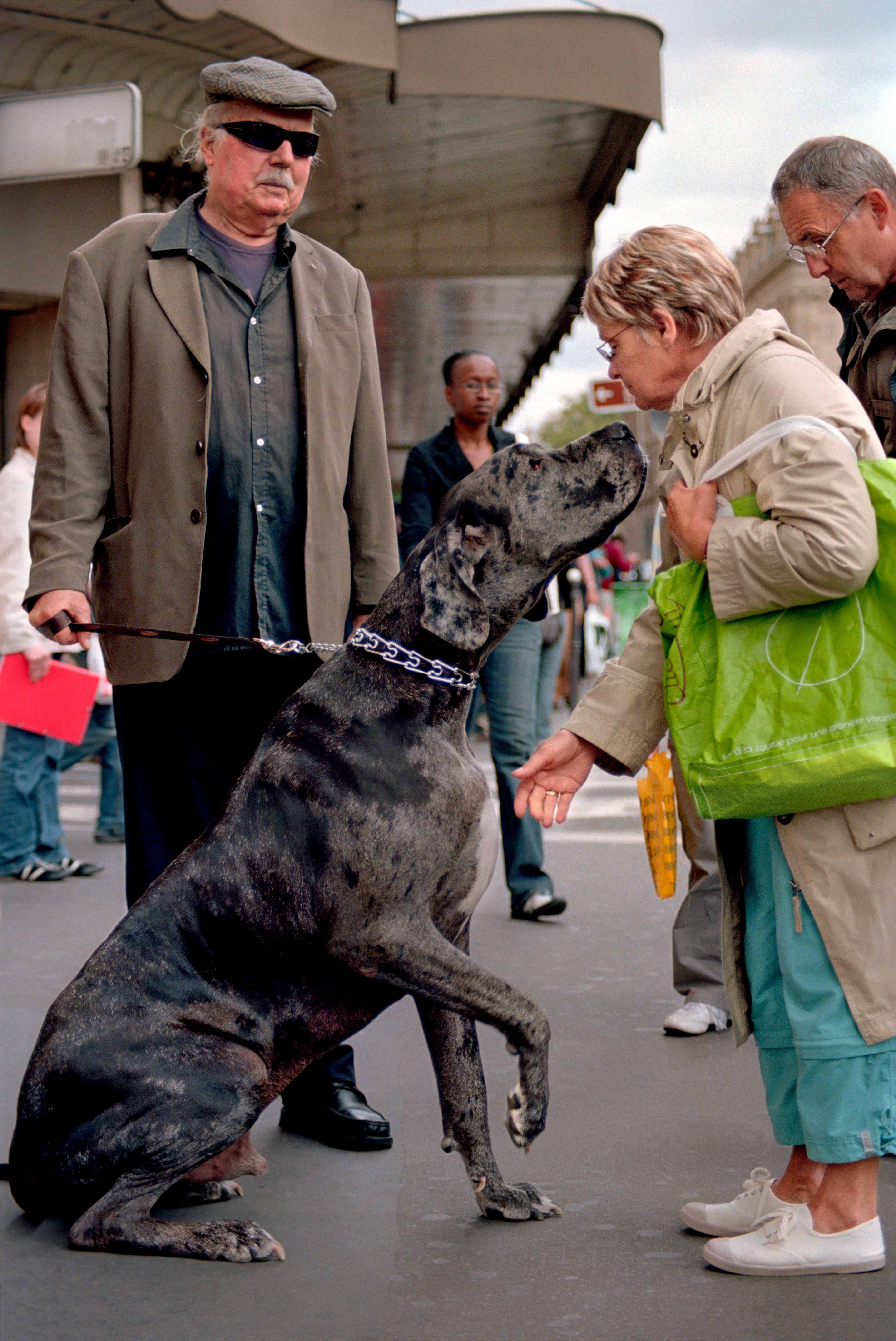
Well, the answer is…it definitely can be a problem. Jumping isn’t just a behavior that may deter your guests from visiting more often; depending on the size of the dog and the size of the person, it could lead to falls and injuries. Of course, this is all dependent on who is involved and their respective sizes. A Havanese jumping on a grown male adult is not going to hurt anyone, but when you have a Great Dane clambering on a small child or elderly relative, it’s a different story altogether.
In isolation, you may think that jumping isn’t that bad. But putting aside the frustration and potential for injury, it also demonstrates a lack of control of your dog in its environment. In addition, it blurs the lines in the dog’s eyes on who is the unequivocal higher ranking member of their family – which should always be the human. There is no reason why your guests shouldn’t be able to enter a calm, welcoming environment without the need to navigate a four-legged moving obstacle course.
Common mistakes dog owners make
As with many behavioral issues, the fault doesn’t lie entirely with the dog – there are changes that owners can make to help manage the situation more optimally.
- Not setting the dog up for success. If you know that your dog is excitable and hyperactive, not taking steps to prevent them charging towards the door is simply contributing to the issue.
- Laughing it off. Your guests, if they are being polite, may laugh off the behavior as just ‘dogs being dogs’ – but that doesn’t mean you have to do the same. Laughter indicates to your dog that the behavior is okay.
- Yelling, pushing or otherwise ineffectively trying to correct the behavior. This simply feeds into the feeling that your dog is getting the attention they are craving. It can also be interpreted as play behavior by your dog.
- Inconsistency. Perhaps one member of your household is very diligent about preventing the dog from jumping, but others take a more lackadaisical approach. This inconsistency means that it is more likely that the dog will jump because the behavior is acceptable sometimes. This is an all-or-nothing situation – you either make sure the jumping never occurs, or you are resigned to the fact that it will happen time and time again. Remember this – for the most part, dogs understand always and never; not sometimes and maybe. It’s also unfair to correct a dog for jumping up on some people but not when they’re allowed to jump up on someone else. The dog won’t understand.
How to stop your dog from jumping on guests
There is no magic wand that will immediately stop your dog from jumping on guests. Instead, as with many things in dog training, it is going to improve in small increments with consistent training sessions. You may need to stage scenarios where visitors enter the home on multiple occasions until your dog gets it right. If your dog has a particular problem with jumping on a particular person, you set up the scenario and wait for the dog to transgress to address the issue with succinct timing.
Here are some training tips that can help manage your dog’s jumping behavior:
- Preparation is key. Make sure your dog has a schedule of enrichment activities and physical exercise to tire them out. This is particularly valuable if you know that visitors will be coming later in the day, but honestly, enrichment and exercise have multiple benefits that won’t just improve your dog’s jumping habit, but will help improve their overall quality of life.
- Have a routine. If you know your dog is excitable, don’t just let them charge towards the front door. Build a routine that creates some distance when a visitor arrives at your home. For example, place them in their crate or put them behind a baby gate to prevent them from immediately rehearsing the jumping behavior.
- Tell visitors to ignore your dog. The most important thing is to provide zero reinforcement for any kind of high arousal behavior and zero reinforcement for jumping. Get your dog used to people walking in and ignoring your dog no matter how tempting it is to engage with the dog.
- Practice, practice, practice. Stage scenarios where neighbors or visitors ring the doorbell, so that your dog can learn not to jump. Train a down-stay, sit-stay or even better a place command. A Place command is a lot easier for a dog to execute when they’re in a state of high arousal rather than a stationary position when they are boiling over with excitement. All they have to do is go to their place bed and remain there. This will improve in stages, and early on in the process, you may need to reward the dog with treats to encourage the behavior. If the dog reverts to the jumping behavior, have the person leave and re-enter the home until the dog is behaving as desired.
- Make sure everyone in your home is on board. This is a common theme in many of our articles, but your plan will fall down if even one member of the household doesn’t follow it. Involve the whole family in training sessions so that the dog never has an opportunity to practice their jumping behavior.
- Get your guests on board, too. You can inform visitors in advance that you are working on your dog’s jumping habit, and they can help be a part of the process by not encouraging the behavior. Tell them to ignore the dog until the dog is in a calm state. Tell them to ignore any jumping and never ever pet the dog if it jumps, and await your instructions for when it is okay to interact with the dog. This will prevent the dog from being reinforced for the wrong behavior, and will make it a much more pleasant experience for your guests. Remember, even subtle things can be reinforcement in the dog’s eyes; like talking to the dog, eye contact, petting the dog, etc..
- Get your dog professionally trained in Basic Obedience. Whether it’s getting private lessons, or having your dog go through a Board & Train program and getting proper instruction at go home lessons – there is nothing like professional instruction in getting the best out of your dog. The dog will learn so much, and you will as a dog handler as well. Problematic behaviors like jumping up on guests can all be addressed even better when the dog understands the full foundation of basic obedience.
In conclusion
There’s no need to resign yourself to your dog’s jumping habits because it’s “just what they do”! With careful training and a plan in place, you and your family can work together to ensure that your dog is welcoming to guests – and that their jumping is a thing of the past.
If you’re following the tips in this article but are still struggling to manage your dog’s jumping when guests come over, reach out to us at K9 Evolutions Dog Training! We will be happy to help. Call us on (612) 227-7019 or email us at info@k9evolutionsdogtraining.com for more details.