Do you ever find that your dog’s behavior differs significantly from one day to the next? Today, they’re behaving like the dog you’ve always dreamed of, yet tomorrow, you know they may cause you endless amounts of frustration.
While it’s true that, just like humans, dogs can have ‘good days’ and ‘bad days’ (based on any number of influences, including nutrition, sleep, environmental changes, external stimuli, and other factors), there may be a more obvious explanation for the lack of consistency in your dog’s behavior – a lack of structure and predictability.
Let’s be honest, life is already unpredictable enough as it is. Dogs, just like people, like to have at least some idea of what they can expect their next day to be like so they can anchor in with confidence to ready themselves for whatever the day may bring when they open their eyes to a new day. We wrote in a previous blog article about consistency, but structure is about how you actually set up your dog’s day in a way that creates stability and predictability. As people, we all want some predictability in our day-to-day, and dogs are no different. Consistency is following up on the structure you put in place.
In this article, we’ll look at why structure affects your dog’s behavior, and how you can create a structured routine to improve your dog’s behavior.
What structure means in dog training
When we think about structure, what we’re really thinking about is creating a framework for our dogs to succeed. Structure isn’t about rigidity, or stressing because you fed your dog three minutes after their scheduled mealtime. Instead, it is about putting in place a routine that allows our dogs to thrive. We want to create a consistent, secure and predictable routine for our dogs that helps to set clear expectations for their behavior.
When you build a structure for your dog, it should include events like:
- Mealtimes
- Sleep/rest
- Potty breaks
- Exercise
- Training activities
- Socialization
- Permitted behavior in the home environment
Consistency across all of these different facets of their lives will help to create predictability for your dog. Dogs, for the most part, understand always and never – not sometimes and maybe.
Why dogs thrive on predictability
Dogs are contextual learners, and they are often very fast learners, too. This means that they can quickly discern what is acceptable behavior (and what is not) based on the set of circumstances they find themselves in (ex: the people around them; the home they are living in; etc.).
When you create a structure for your dog, you are encouraging them to learn in the same context again and again. This is valuable, because the repetitive nature of the structure allows you to promote good behavior, and correct undesirable ones, without any other variables changing in their life. The security and patterns that emerge as part of your dog’s routine create a stable and healthy learning environment for them.
How structure reduces problem behaviors
You may be wondering precisely how structure actually relates to behavioral outcomes, so here are a few scenarios where structure is extremely helpful:
- Stressful greetings to guests at the door. Without a clear structure or defined guidelines for your dog’s behavior, guests arriving at your door can result in a whirlwind of chaos, with your dog jumping all over your visitors and barking in an overexcited manner. In this example, good structure looks like implementing a calm process for when guests arrive – perhaps your dog has to go into a down-stay away from the entrance, and then calmly greet the guests once instructed. One of the best commands is for your dog to execute a Place command, which is a lot easier than executing a stationary position if they are tuned up in high arousal. In a Place command, they can choose to sit, down, chew on a bone, or any other number of activities; it doesn’t matter, but all they have to do is remain in Place until they have been released with a terminal marker. It is their safe area where they go to relax and can get away from perceived chaos like children or other relatives coming to visit.
- Leash pulling on walks. If your dog pulls your shoulder out of its socket on every single walk, but you only correct the behavior infrequently, they do not understand that it isn’t acceptable to be pulling. There is no structure to the walk – your dog simply has the freedom to do what they want. The structure here is to think beforehand about how you will respond to your dog pulling, and then ensure that you correct it consistently when it occurs. Your dog needs to know clearly the contextual differences between exploration and work mode. When we are in work mode, the dog is to be in heeling formation, walking right by the handler’s left side with their front right shoulder running parallel with the handler’s left leg and a nice U-shape in the leash. The dog must understand that this is not the time to ‘go be a dog and do whatever you want’ – they are in work mode, and the dog is to be loose-leash walking, being attentive and moving when the handler moves. There’s a time in a place when a dog can be a dog, but they need to see the difference in the contextual picture.
- Destructive behavior because of boredom. If your dog has a lack of mental stimulation, they may potentially exhibit destructive behaviors and chew on furniture (or even themselves) to provide an outlet. A well-rounded structure will provide enrichment activities for your dog to expend their mental energy (ex: frozen KONG treat, snuffle mat, ‘hide the treat’ game, and so on). If your dog knows they will have a chance to unleash that energy, it is less likely their boredom will manifest in destructive behavior.
- Overexcited behavior due to lack of exercise. Have you noticed how your dog will often curl up on their bed in the evening after an off-leash walk or a great session of fetch? This is part of their recovery after exercise. Not meeting your dog’s exercise needs can result in overexcited behavior in any number of situations, simply because your dog needs an outlet for all that energy.
- Constant anxiety. With no predictability or structure, your dog may have no idea what is going to happen next. This can result in any number of anxious behaviors, from minor irritations like whining or barking, to harmful ones (ex: extreme separation anxiety where the dog hurts themselves trying to escape from their crate). Providing structure creates predictability for your dog, and often reduces the potential for anxious behavior.
Oftentimes, people don’t realize how much dogs anchor into a predictable routine until they have to – for example, move to a new home, or they’re going through their actual human children leaving the nest and moving out of the home. These big contextual shifts have huge impacts in the dog’s world, and dogs who are otherwise very stable can become unstable and exhibit all kinds of weird or undesirable behaviors.
How boundaries can help
It might seem counterintuitive, but pet dogs who live their lives without structure or boundaries actually have far less freedom than their counterparts who do have structures in place.
Think about it for a moment. If your dog is overexcited or anxious, fearful, nervous, or any of the other factors that can arise from not having predictability in their life, they spend most of their days being corrected for the things they’re doing ‘wrong’. This constant barrage of corrections increases their stress, because the dog doesn’t know what they’re supposed to be doing in place of that.
One exercise that demonstrates this was something we did when I was in Dog Training College, when we had one of our fellow classmates walk into a room. The rest of the class was instructed to say “No!” loudly in a game of Hot and Cold, but we only said “No!” until they got the right answer. What usually happened in this instance was that the classmate would give up, or just be overwhelmed or overstimulated. However, when we used a marker system, and actually played the non-punitive game of Hot and Cold with them getting warmer and warmer, they were able to complete a task with far less stress and demand.
If we’re having to use far too many corrective measures, it is very likely that the culprit is that the dog doesn’t know what they’re supposed to be doing. If we’re just telling the dog “No!” all day and being punitive or corrective, it creates lots more confusion and ambiguity, because we haven’t clearly defined what the expectations are. We actually haven’t communicated the structure that teaches them right from wrong. When a dog does understand what they’re supposed to be doing, but we’re half hearted or only making the corrections half the time for ‘never’ behaviors, the dog doesn’t understand that “sometimes and maybe” aspect. A dog will never understand why they’re not allowed to jump up on grandma, but it’s okay to jump up on their teenage son. A dog isn’t going to understand that ‘sometimes, I can get up on the furniture at my house, but I’m never allowed to get up on the furniture at someone else’s house’. If they are allowed on the furniture, they should have the clear expectation that when they’re asked to “Off“, they have to get off the furniture when asked to get off the furniture.
When your dog has boundaries in place, they are less likely to ‘test’ certain behaviors because they already know the difference between desirable and undesirable behaviors. It also means it is easier for owners to trust their dogs because their pet’s behavior is far more predictable, so the dog spends more time doing things they enjoy, and less time being corrected.
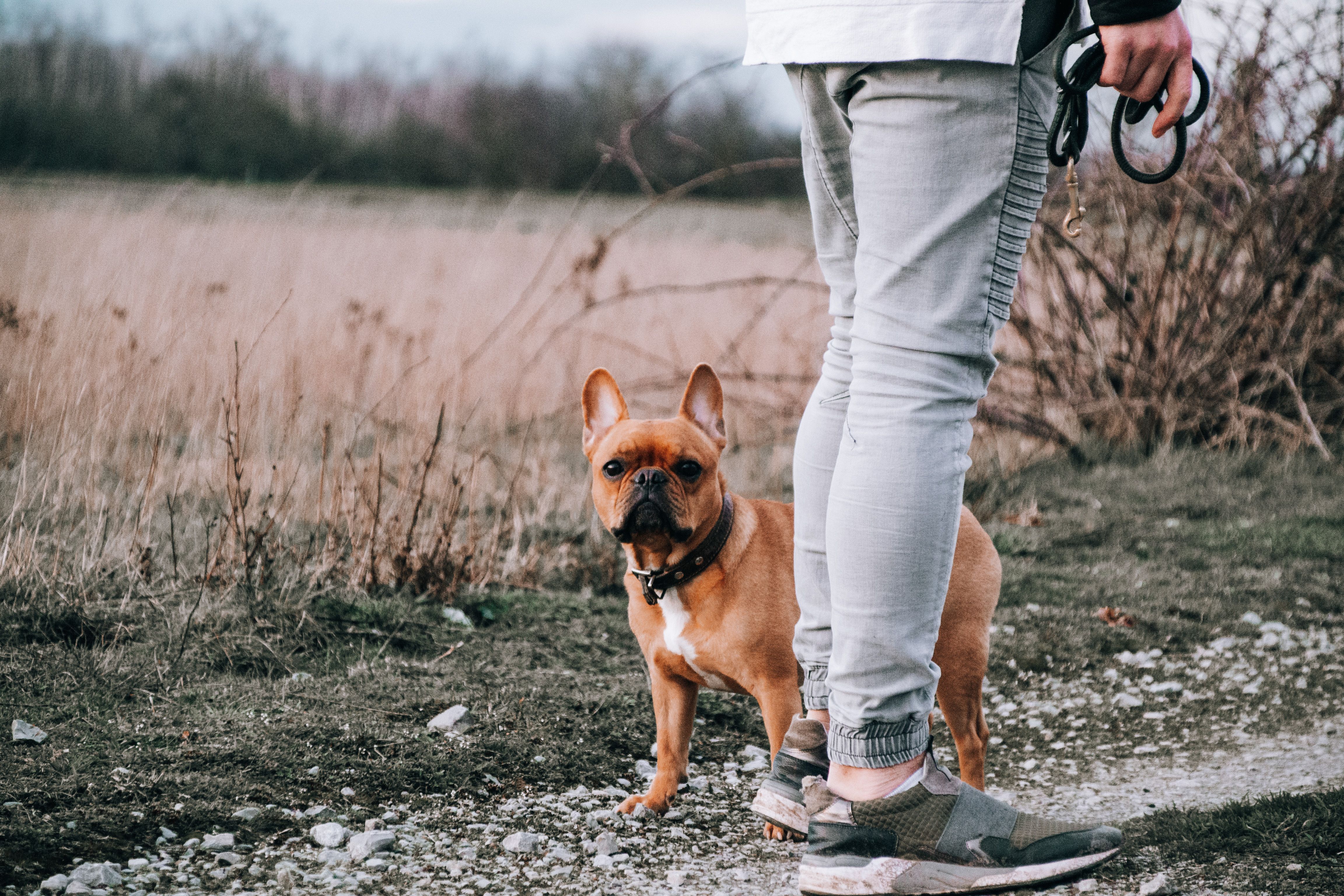
The do's (and don’ts) of building your dog’s structure
- Do: Set consistent times for the key components of your dog’s day – mealtimes, exercise, downtime, etc.).
- Do: Create time in the structure for short training sessions to reinforce desirable behaviors.
- Do: Have a plan to include physical and mental exertion into your dog’s structure. (Mindless physical activity is not enough.)
- Do: Reward calm, relaxed behavior.
- Do: Remain consistent with your structure to maintain predictability.
- Don’t: Allow other members of your household to deviate from your dog’s structure.
- Don’t: Be inconsistent when communicating with your dog.
- Don’t: Be hard on yourself when life happens and the structure lapses momentarily. Dogs are very resilient and can pick up patterns that have been reinstated when life got busy.
- Don’t: Chop and change the structure from week-to-week.
- Don’t: Give your dog too much unstructured freedom that can actually restrict them as opposed to allowing them to thrive. For example, it’s fine for your dog to play with another dog, but it shouldn’t get to a point where dogs are just playing and playing, and consequently becoming dopamine junkies. This is where your words lose potency and become white noise in the background when you ask them to rein it in and execute a command.
Personally, I let my working dogs play all the time. But they know that when I ask them to execute a command, my words have meaning. They know when playtime is over and we are shifting into work mode. They respect the words that I say, because my words have meaning, and that’s done through strong leadership, clear communication, and consistency every single time. Dogs who are thriving and drinking in life know that there’s a time to work, there’s a time to play, and there’s a time to chill. Just as with humans, we know that when we go to work, we can’t just do whatever we want and have a party – there’s work to be done! Or if we sit down to watch a movie, it isn’t time to get up and play basketball in the middle of the living room. Dogs are very adept at understanding contextual scenarios, and the more consistent you are, the more they will be at ease, and the more you’ll be living your best life with your dogs.
In conclusion
Structure is a vital (and often overlooked) part of your dog’s life. It puts predictability and stability as a priority for them, and that is essential for improved behavioral outcomes. At K9 Evolutions Dog Training, we can help you plan and implement a structure in your dog’s life that will make life more enjoyable for both you and your dog. Contact us at (612) 227-7019 or email info@k9evolutionsdogtraining.com to find out how we can assist.