As we have explored in previous articles, Mondioring is one of the most demanding dog sports in the world. It combines advanced obedience, complex environmental challenges, high-level agility, and controlled protection work – all performed under pressure and in constantly changing scenarios.
Unlike many dog sports, Mondioring isn’t predictable. Each trial introduces new distractions, themes, and challenges that test not just what a dog knows, but how well they can think, adapt, and perform under stress.
While Mondioring is growing in popularity, it is important to note that not every dog is suited for this sport because of the demands it places on the dog. And while training plays a huge role, certain breeds consistently rise to the top due to their genetics, drives, and working ability.
In this article, we’ll break down the best breeds for Mondioring – and more importantly, why they excel.
What makes a good Mondioring dog?
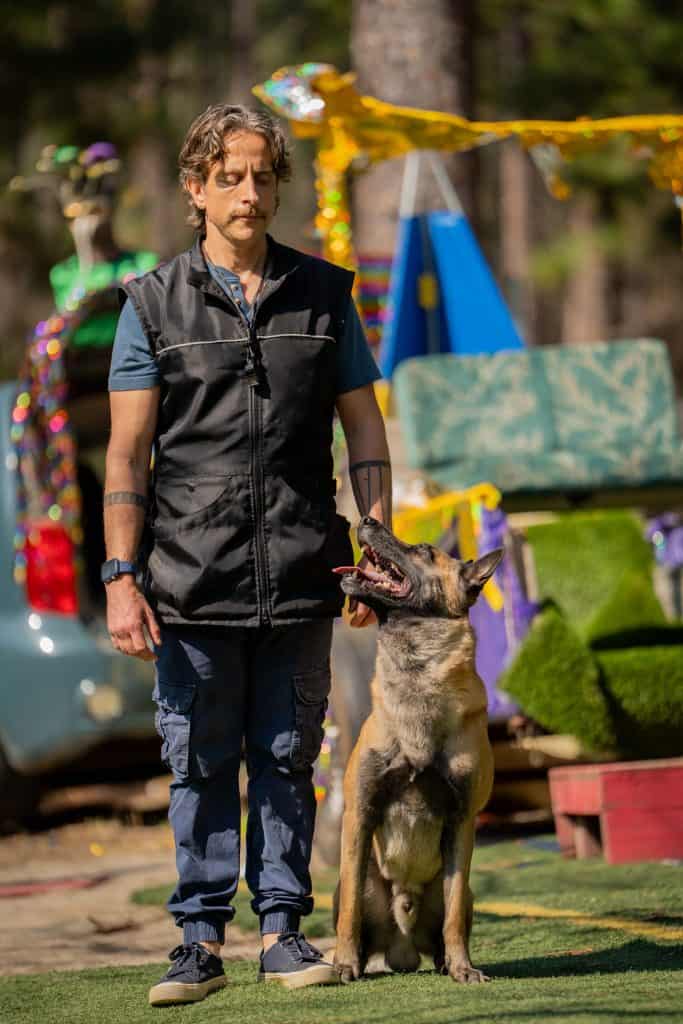
Mondioring stands apart from other protection sports because it requires dogs to perform in highly unpredictable environments. Whereas IGP and other sports follow the same routines, a Mondio trial will never look the same because of the varying themes on the field. For example, you could have a field decorated for a ‘Game of Thrones’ theme, or a field decorated for a ‘Halloween Ghouls’ theme.
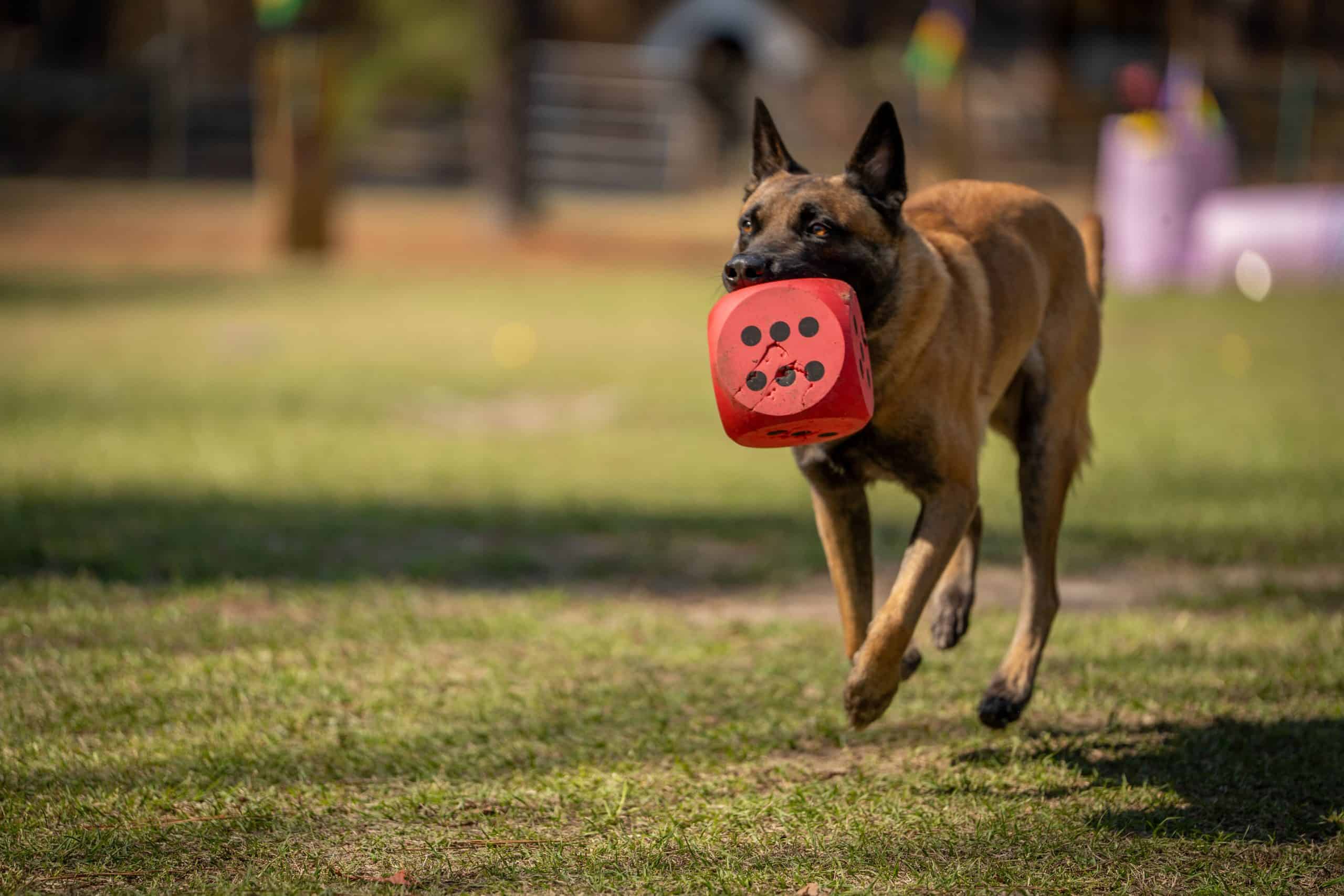
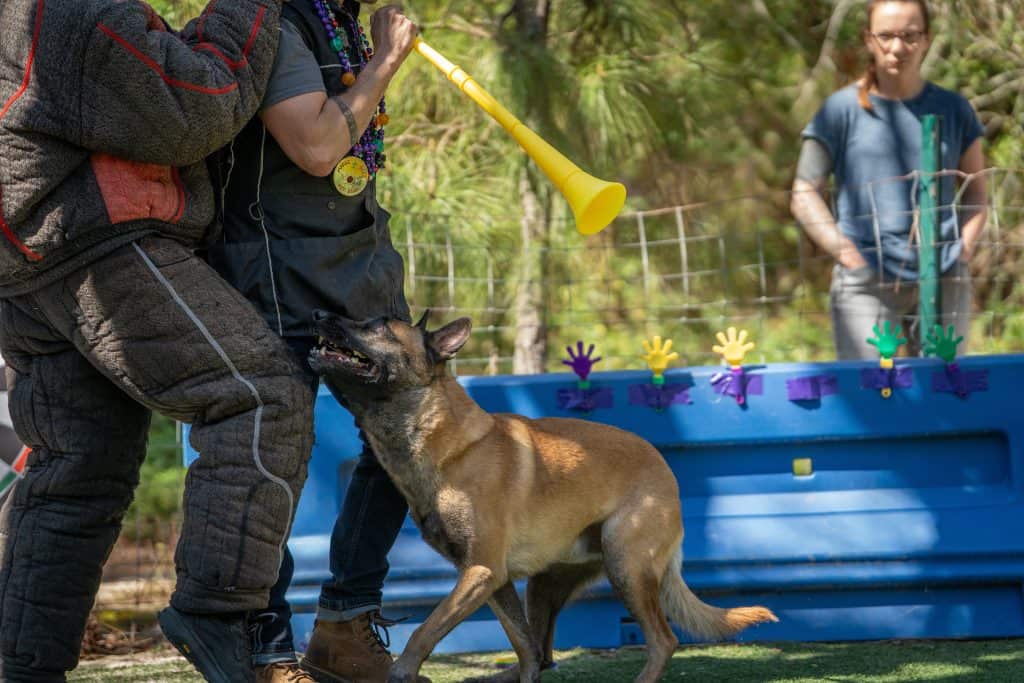
A Mondio Trial might include unusual surfaces, different objects for the dog to guard, complex hides for decoy searches, decoys doing different theatrical routines for defense of handler, moving distractions, strange objects for the retrieve, and complex obedience sequences. All of these are designed to test the dog’s stability and control. These unpredictable variations are completely unknown to the dog. The handler also doesn’t know these variations until they’re allowed to enter the field right before they trial and the ‘dog in white’ shows the entire routine for who is selected to go in a particular order; the Level Ones, the Level Twos, and the Level Threes for example.
To succeed, a dog needs:
- Strong prey and defense drive
- Clear-headedness under pressure
- Athletic ability and endurance
- High trainability and responsiveness
- Daring bravery
- The ability to switch between calm obedience and high-intensity work
This combination of traits is rare, which is why certain breeds dominate the sport.
Breeds most commonly used in Mondioring
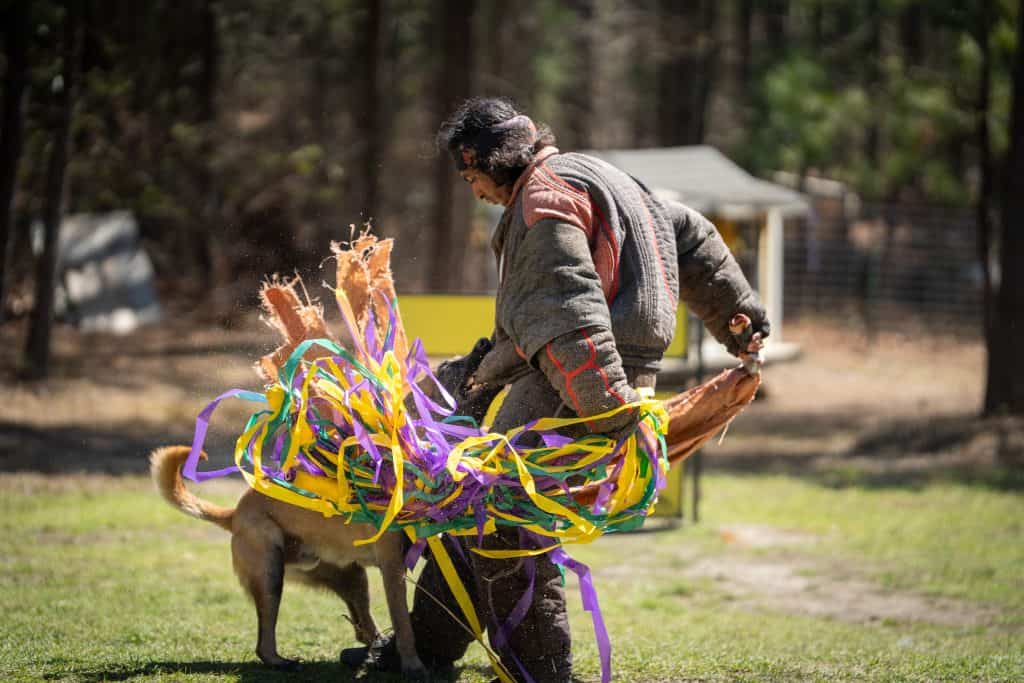
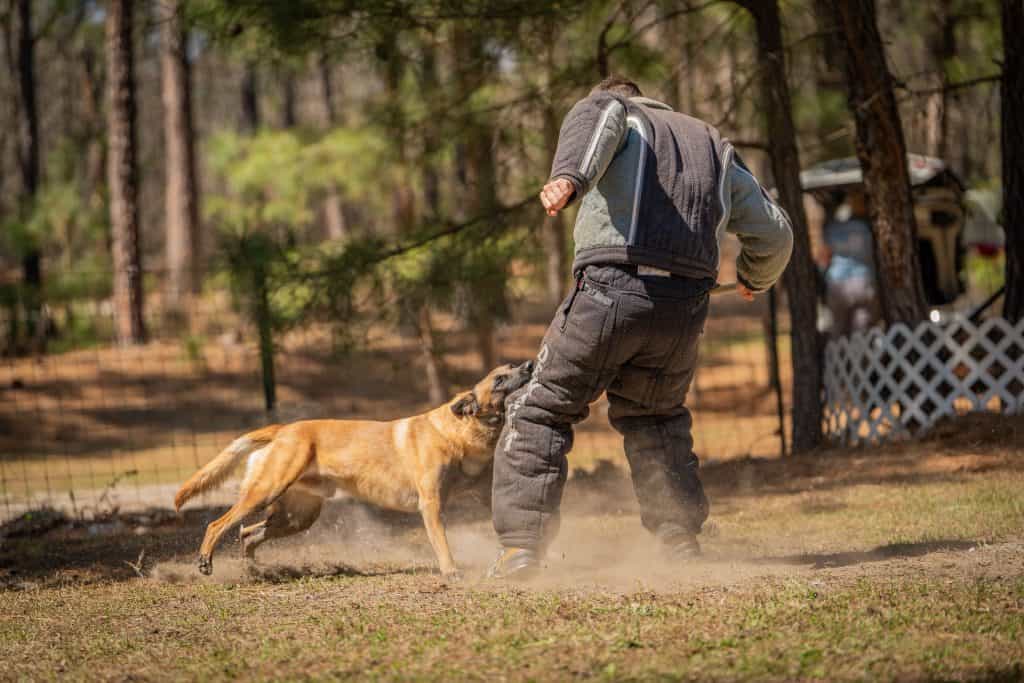
Belgian Malinois
When people think of Mondioring, they often think of the Belgian Malinois. This breed has become the dominant force in the sport, and it is not by accident.
Historically, Belgian Malinois were developed for high-level working roles, and they bring a combination of traits that make them ideally suited for Mondioring:
- Intense work drive
- Exceptional trainability
- Explosive speed and agility
- Strong, consistent grips in bitework
- Ability to recover quickly from stress
Perhaps most importantly, Malinois tend to stay mentally engaged even under high pressure.
However, it is important to understand that not every Malinois is automatically suited for the sport. There are plenty of Belgian Malinois who may have some excellent working dog attributes, but just do not have the necessary ingredients to compete in this sport. This is one common misconception – that any Belgian Malinois can do this sport. Instead, the dog’s early rearing, working-line genetics and vigilant development still matter significantly, as well as consistent training on an almost daily basis.
German Shepherd
The German Shepherd has a long history in working roles and protection sports. While they are not as dominant in modern Mondioring as Belgian breeds, they are still capable competitors.
German Shepherds bring:
- Strong trainability
- Power and structure
- Versatility across multiple disciplines
- Deep working history in police and military roles
However, modern sport demands have shifted toward dogs with higher speed, agility, and environmental resilience. These are areas where Belgian breeds often have an edge. Many German shepherds don’t have a big enough ‘gas tank’ for the endurance required of the sport. With that said, the right German Shepherd (particularly from strong working lines) can still perform at a high level in Mondioring.
Dutch Shepherd
The Dutch Shepherd is often compared to the Malinois, and in many cases, performs at a similar level in Mondioring.
These dogs share a similar working heritage and are known for:
- Strong environmental stability
- Balanced drives
- High resilience
- High intensity
- Solid bitework
- Consistent focus
Many Dutch Shepherd lines have been selectively bred for sport and working roles, making them reliable competitors in protection sports. For some handlers, Dutch Shepherds offer a slightly different balance of traits. Sometimes, they are a little more measured or steady compared to the intensity of a Malinois, and sometimes they’re a little bit too high in intensity to think straight in certain scenarios.
Other breeds
While the three breeds above tend to dominate the Mondioring scene, they are not the only breeds seen in the sport. Other working breeds that have participated include Doberman Pinschers, Beaucerons, Giant Schnauzers, and Bouvier des Flandres. Similar working breeds with a European heritage may be well-suited to succeed in Mondioring.
These breeds can be successful, particularly in the right hands and with the right genetics. It’s always impressive when there are the occasional outliers – like seeing the occasional Siberian Husky or Rottweiler achieve titles in the sport. However, they are less commonly seen at the highest levels of competition due to differences in drive, agility, or environmental stability. The main reason why you see so many Belgian Malinois in the sport is due to the fact that they just do not gas out easily.
Why breed isn’t the only consideration
One of the biggest misconceptions in dog sports is that choosing the “right breed” guarantees success. In reality, individual genetics matter far more than breed alone – and within any breed, there is significant variation in traits like drive levels, confidence and trainability. A well-bred working-line dog will almost always outperform a poorly bred dog of the same breed.
Beyond genetics, success also depends on training quality, the rearing of the dog, and handler built on experience and dedication. You can have an amazing dog who can do all the things, but if your handler skills aren’t at a Pro Level, it won’t matter come trial time. Even the dog that seems to be a perfect fit for Mondio, it can fall short without the right development and guidance. It is frequently said that it takes roughly two years of training and dedication to even get on the field to compete in Mondioring.
How to choose a dog for Mondioring
If you’re considering Mondioring, choosing the right dog is one of the most important decisions you’ll make. For those who are passionate about competing in the sport but have little prior experience, identifying an experienced trainer and club early on in the process can be extremely beneficial. This will allow you to see the kind of work it entails to see if the sport is something you have the ability to commit to and what it is like to have that type of dog in your life.
The trainer’s experience can help you to find the right dog for your Mondio pursuits. They’ll likely recommend seeking out proven working lines, and will recommend observing the behavior and temperament of the parents if possible. Confidence, drive and recovery ability are all pivotal.
Remember that Mondioring is not a casual hobby – successful dogs and handlers need to commit to structured, consistent training. This is not a weekend warrior type sport. It is vital to be realistic about your own experience level and goals when embarking on Mondioring, but it can also be a very enjoyable sport to be a part of. There is nothing more rewarding than going on a journey with your dog that you’ve both poured your heart into with a lot of time, energy, “blood, sweat and tears.” All of which give you memories of a lifetime with your dog. And there is nothing like the electric, synergistic energy you develop with your dog through the training and the trials when you go on this journey. It’s a bond and level of communication that your average dog owner will never get to experience between a handler and their dog, to a degree in which you and the dog both know what you’re thinking.
The sport of Mondioring necessitates that you and your dog both train like professional athletes, making professional handling a must, and keeping your dog in elite physical shape and training almost on a daily basis. The reason why I frequently call this a dog trainer’s sport is because of all the work that you have to put in and when it’s time to enter a trial, it becomes proving time for your training. All of your hard work and training comes under a microscope when you walk onto the field with your dog being completely naked (not even wearing a flat collar). All of your successes and potential problems in your training will be revealed, and it can be deeply humbling. It unequivocally makes me a better dog trainer in all facets of dog training. It also makes people who aren’t professional dog trainers, dog trainers by default and professional handlers.
In conclusion
Mondioring is a sport that pushes both dogs and handlers to a high level. It requires more than just obedience; it demands clarity, resilience, and performance under pressure.
While breeds like the Belgian Malinois and Dutch Shepherd consistently dominate, success ultimately comes down to the individual dog, its genetics, and the quality of training behind it. Choosing the right dog is just the starting point. What you build from there is what determines success.
There are many ring sports out there that are beneficial for folks who want to become better dog handlers and learn the art of dog training. While you might not be ready for Mondioring or have the ability to commit to it, there are other dog sports out there that are very challenging and more realistically attainable for newbies or someone with a particular type of dog that doesn’t necessarily have the ingredients for Mondioring.
If you’re interested in getting started in Mondioring or evaluating whether your dog is a good fit, working with experienced trainers is essential. The right guidance early on can make all the difference in developing a capable, confident working dog. At K9 Evolutions Dog Training, we are extremely passionate about Mondioring – if you have any questions, please reach out to us at info@k9evolutionsdogtraining.com