
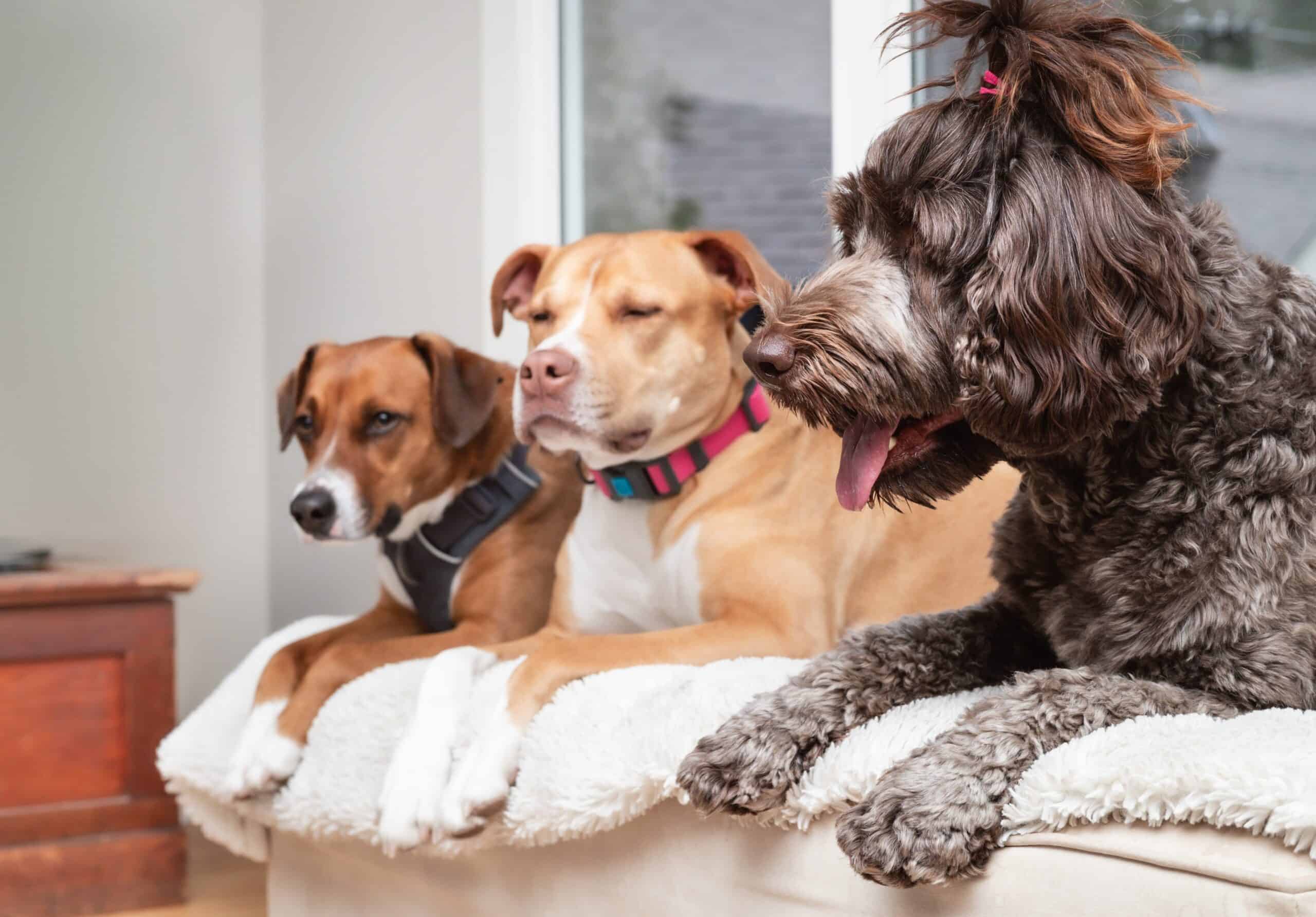
It sounds like an idyllic life as a dog owner – you watch on proudly as your two (or more) family dogs play happily together in the backyard. No matter the situation or context, all of your dogs respond obediently to your every request. Your multi-dog household is always harmonious, and never has intra-dog conflict.
Now, let’s wake up from the dream. If only owning more than one dog was that easy.
The reality is that multi-dog households can be a challenge for dog owners to manage – this goes for novice and experienced dog owners alike. There are natural benefits, as your dogs will always have a playmate to interact with. However, if it isn’t managed properly, then it can create stress for two-legged and four-legged members of the household.
In this article, we’ll offer some tips for successfully navigating your multi-dog household. Whether you’re about to add a second dog to your home, or you’re already managing several dogs under one roof, these tips can help to build the relationships between your pets.
Before adding a new dog, consider the characteristics of your existing pet
If you are thinking about bringing a second dog into your home, it is worth taking a moment to consider the characteristics and personality traits of your current dog. Ideally, you want your new pet to be complementary to your existing dog – this doesn’t mean that they need to be exactly the same (in fact, this in itself could also cause some issues), but you want them to be able to interact with one another in a way that is safe and easy to manage. Things to consider include:
- Size. This is definitely something to bear in mind, and this actually has less to do with behavioral characteristics than simply the safety considerations and physics of mixing a larger dog with a smaller dog. Smaller dogs can often be unintentionally stomped or trampled, particularly if the bigger dog is high-energy. Having dogs that are similar size makes dog-with-dog play a lot safer. You can certainly have dogs of contrasting size, but it will require more management of the bigger dog to not play too rough with a smaller dog who can get injured more easily.
- Energy levels. If you have a lower-energy breed, they may be overwhelmed by a high-energy breed; conversely, an energetic dog may become frustrated when they try to initiate play or other activities with their low-energy housemate and receive nothing in return. While it will never be an exact match, it makes sense to try and keep the energy levels from one dog to another at the same level. Another thing to consider is if you have an old dog living the last few chapters of its life, getting a clumsy unregulated puppy is likely to cause high levels of stress in an elderly dog, or may even lead to some aggression (for example, if the dog is trying to protect sore joints or arthritis). A very elderly dog may refuse to teach a young dog how to be a dog, and may be heavy handed in correcting a young dog due to soreness that comes with old age.
- Personality and behavior. Consider how your dog currently interacts with unfamiliar dogs, and how they may change with a new dog in the home. For example, if they are a notorious resource guarder, you will need to plan accordingly. You will also need to think about the fact that the existing dog will receive less attention than before, and how this may impact their behavior and your bond. Dogs can resource guard people in the home too. The conclusion here isn’t to avoid getting another dog to appease your current dog – it’s simply to think in advance about the best way to manage the situation.
Focus on each dog’s individual needs first
Even if you follow the prior advice exactly, every dog is an individual and will have specific needs. Rather than trying to ‘run before you can walk’, it can often be a better idea to work with each dog individually on a training program to build their fundamental cues. This includes a foundation of obedience, a reliable recall, and practising in public around unfamiliar dogs. If your current dog is the only dog in the household, you can begin working on this before doing the same things with their new companion. Working with dogs one-on-one typically results in better training outcomes due to fewer distractions, and can also enhance the bond between you and the dog.
If your current dog has a severe behavioral issue (ex: dog aggression, severe fear or anxiety, extreme resource guarding), it is definitely better to resolve this prior to bringing another dog into the home. Some owners think that getting another dog will magically solve these behavioral problems, but usually it will actually only serve to exacerbate them. In cases of aggression, this can be a safety issue for all parties.
Remain consistent with commands and expectations
Using the same wording for commands can increase consistency and formalize expectations across the entire household – so when you use the word for recalling (ex: “Come!”), all dogs will respond to the cue. In addition, make sure that you are consistent with rules – you can’t expect it to be okay for one dog to be allowed to sit up on the couch, and then correct another dog in your home when they do the same thing.
Make sure that all the human members of your family understand how pivotal it is to adhere to this level of consistency. Conflict can often arise (both human to human, and dog to dog!) when one member of the family allows their favorite dog to do something that the dog isn’t allowed to do, such as counter surfing or being fed from the dinner table.
Manage resources
Every time you add another dog to your home, you are increasing the competition for resources. In this sense, we aren’t just referring to food as a resource – in fact, a resource can be anything your dog wants. So, while it could definitely be food or treats, it could also be things like toys, attention, playtime, walks, activities, space or even you – anything that your dog prioritizes for their wellbeing. Of course, as a percentage, it’s a bigger change when you go from one dog to two dogs, as opposed to having seven dogs and adding an eighth – but it is a change nonetheless.
Ensure that you provide adequate resources to all of the dogs in your home. This reduces the risk of behaviors like resource guarding developing. Make sure each dog has their own area to sleep, along with their own food bowls, toys, etc.. It is my recommendation that each dog has their own crate so they can enjoy enclosed alone time, and it is an excellent management tool in a multi dog house. Crate training is pivotal if you’re going to have a multi-dog household. Remember, dogs are all descendants of wolves and they are den creatures, so crate time is a good thing, particularly when you’ve done the work of making it a positive space for them.
If you’re going to introduce another dog or puppy into your home with an existing dog, crate training is paramount. Giving the resident dog of the household frequent breaks from the new dog will bring about calmness and a smoother transition. The new dog will feel safe and give them a chance to decompress to their new environment. In the early days of integrating a new dog into your home, always supervise dogs when they are playing with toys to ensure that they are not becoming protective or stealing toys from another dog. Providing a mixture of mental and physical enrichment is essential to your dog’s wellbeing, no matter how many dogs are in your home.
Manage interactions carefully
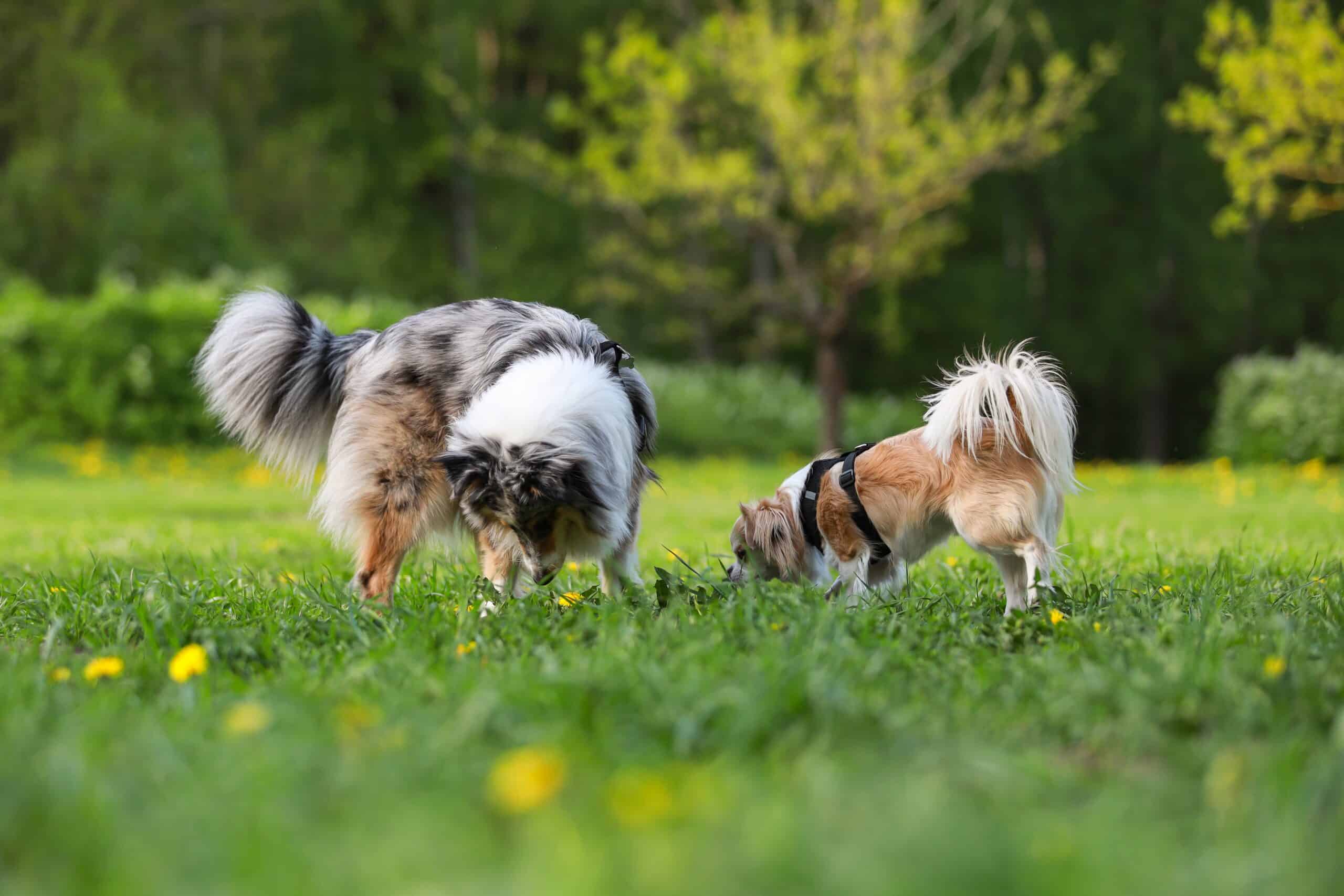
The exact nature of your initial interactions when introducing a new dog into your home will depend on your assessment of their personality. Generally, it is better to start off slow and work your way up. If safety is a consideration, please reach out to us at K9 Evolutions Dog Training for instructions on how to introduce two dogs; there is a right way and a wrong way to do this. There is a safe way to do an on-leash introduction between two dogs but it is always done nose to butt first. You should never introduce two dogs nose-to-nose, eye-to-eye on a leash. An introduction between two dogs should always be done on a walk with one dog per handler. Using perpetual motion, allowing one dog to check the other dog out (nose to butt) while both dogs are in motion. Then, letting the other dog go ahead, allow the other dog to get information (nose to butt).
You do not want to introduce two dogs standing stationary, head-to-head in opposition reflex from a leash that is taut. Perpetual motion on a walk makes not only your body language more relaxed, it will also deescalate any apprehension or stiffness in the dog’s body. Motion helps change an emotion, and prevents a dog from getting stuck in an emotion. Don’t tighten up or tense up on the leash, as this can immediately cause a stress response in your dog, and affect the success of the overall interaction. You want to be relaxed, but ready to respond if aggression is triggered in one of them within a split second.
Take your time and read the dogs. If you see a flagged tail or any kind of stiffness or rigidity in one of the dogs, keep it moving and give the dogs a wide berth on the walk. You should not do a complete introduction all in one day. The aforementioned introduction above would be something to do for a couple days, allowing the dogs to get used to each other‘s presence while taking in olfactory information.
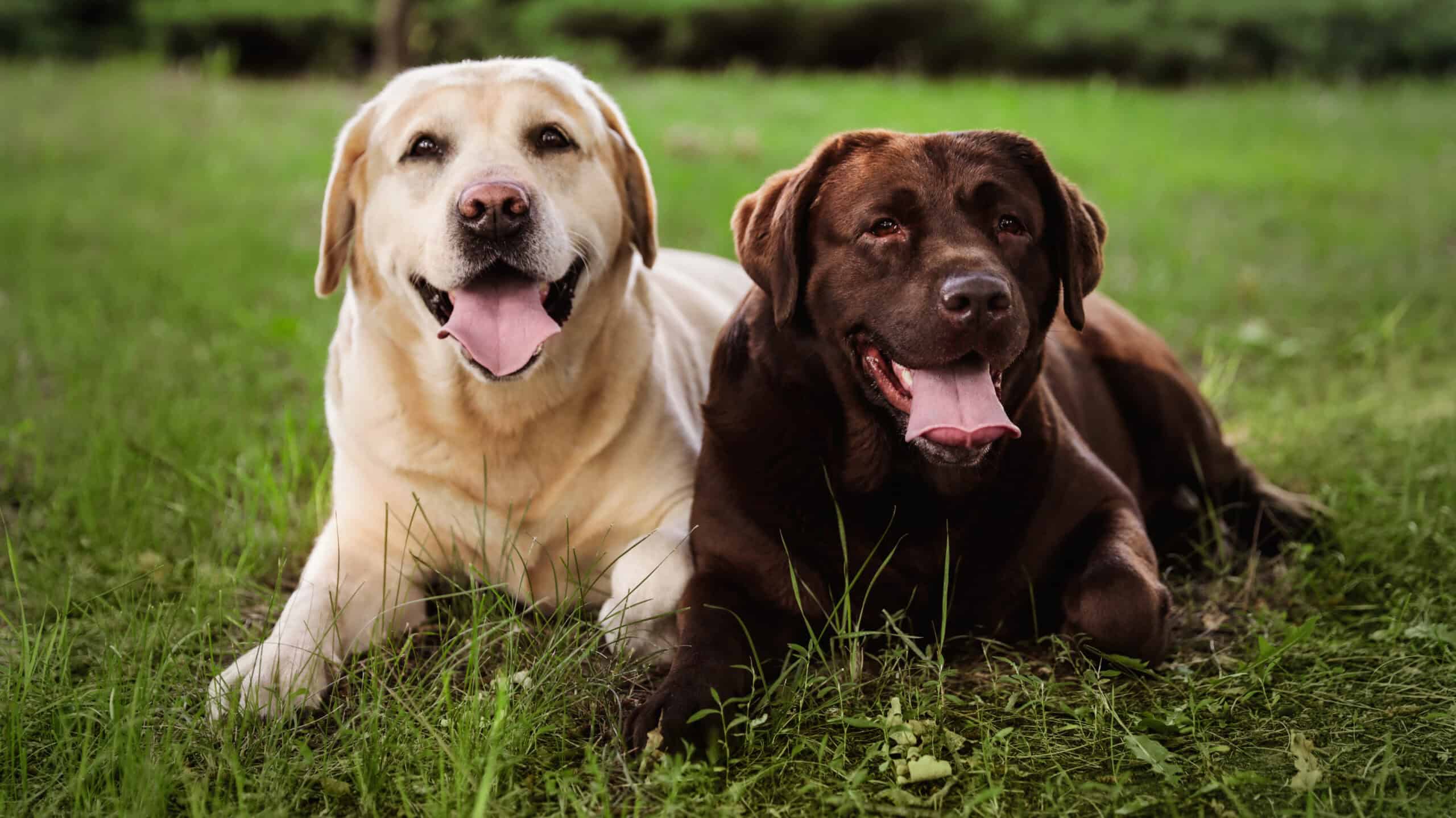
In the early stages of bringing the new dog into your home, constant supervision is non-negotiable – you simply have to do it. Remember, a ton of olfactory information is being taken in by both the resident dog and the new dog just by being in the same household, so go slowly. They are both getting acclimated to this new change in environment. Crate and rotate in the early stages will be your best friend in giving the dogs a break from each other.
Even if everything seems rosy when your dogs are interacting, you still need to watch for the potential flashpoints that could arise. Pay close attention to the body language of all your dogs, and watch out for potential stress signals or unusual changes of behavior. In addition, you may have two dogs that hit it off and become best friends; that doesn’t mean that playtime should go on endlessly and uninterrupted by you. Two dogs playing endlessly can lead to injury and it can also create two dopamine junkies, which will make you and your words matter less to them when all they want to do is play. There’s a time to play, there’s a time to chill, and there’s a time to work; and by that I mean getting your dogs into a training program or working obedience if they’re already trained. Again, all dogs are descendants of wolves. Wolves are pack animals with a family structure similar to humans. Generally speaking, the alpha female and alpha male that lead a pack of wolves in the wild are not the meanest or the toughest, but they are the most levelheaded and resolute in making all the decisions and managing the lower ranking wolves so that everyone can stay alive and eat again.
Dogs understand that we are humans and not dogs. However, they do consider us part of their family unit, and look to us as higher ranking dogs – but only if you behave in such a way. This is done by communicating clearly boundaries and limits. You decide when play begins and when play ends. Frequently interrupting and putting play on pause if things get too rough is part of your responsibility. If dogs are starting to compete for toys, you take all the toys away and make it a neutral environment. In short – make your words and presence have meaning.
When to seek help from a professional dog trainer
If you have followed the guidance in this article, then hopefully, you will be able to carefully manage and integrate your new dog into your home. If you already had multiple dogs in your home before reading this article, then the training tips should help to create a harmonious atmosphere in your home.
However, there are some situations where working with a professional dog trainer can be beneficial, such as in the following circumstances:
- Aggression that has led to (or could potentially lead to) fights or injuries between your dogs
- Resource guarding around food, toys or people that you no longer feel can be managed safely
- One dog is displaying consistent changes of behavior, indicating stress or discomfort with the situation, that you are unable to resolve (growling, barking, etc.)
- Regression in training, where one or more of your dogs no longer respond to your instructions.
In these instances, it may be best to reach out to a professional for help. At K9 Evolutions Dog Training, we can help lower the stress and help your dogs to interact harmoniously with one another. Reach out to us at info@k9evolutionsdogtraining.com or call us on (612) 227-7019 to find out how we can help.