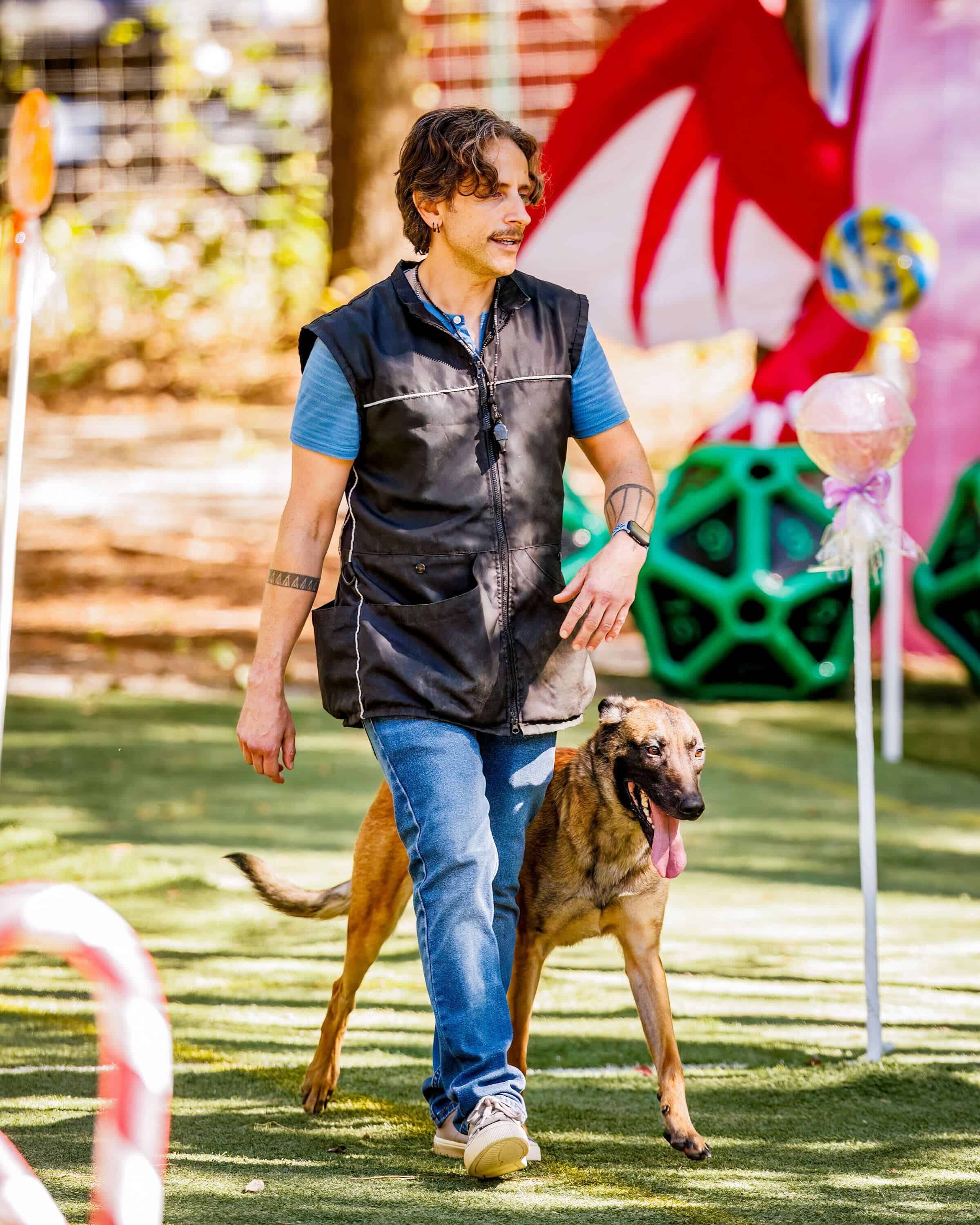
As a dog owner, you have a lot of options to choose from when it comes to choosing a dog trainer. It can be difficult to understand what separates one dog trainer from another, so we wanted to take the time with our founder and head trainer, Jesse Gervich, to learn where his passion for dog training comes from – and how he approaches his work. In the Q&A below, Jesse talks about his dog training philosophy; what success looks like; and even offers advice to budding trainers looking to make it in the dog training industry.
How did you get started in dog training? What drew you to it?
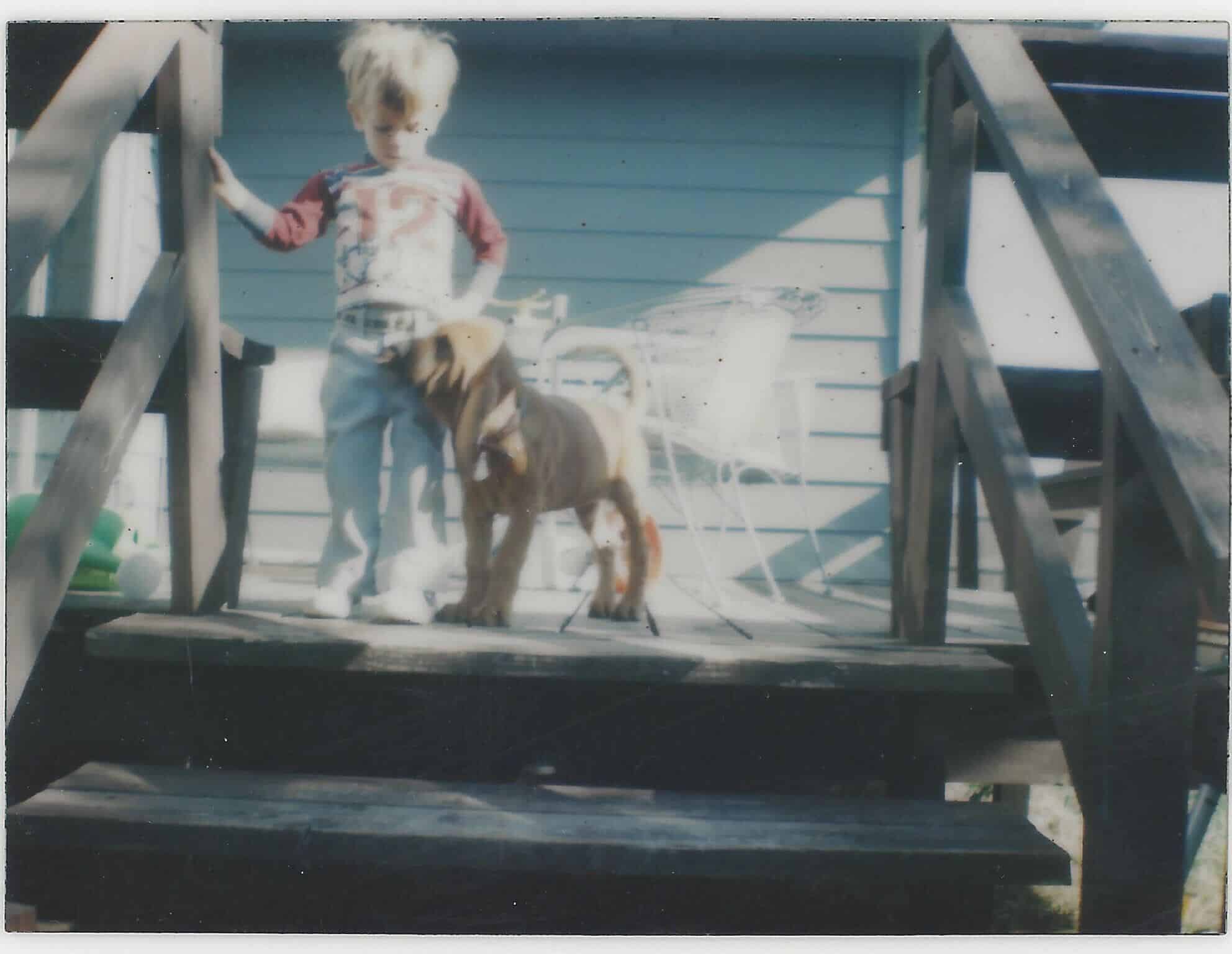
I started in dog training from the moment I could walk. My dad was taking our 150-pound Bloodhound, Chewbacca, through obedience school. He had all kinds of behavioral problems and I was fascinated. I wanted to understand what my dad was doing, so he got me involved. He even bought me a dog training book that I still have today.
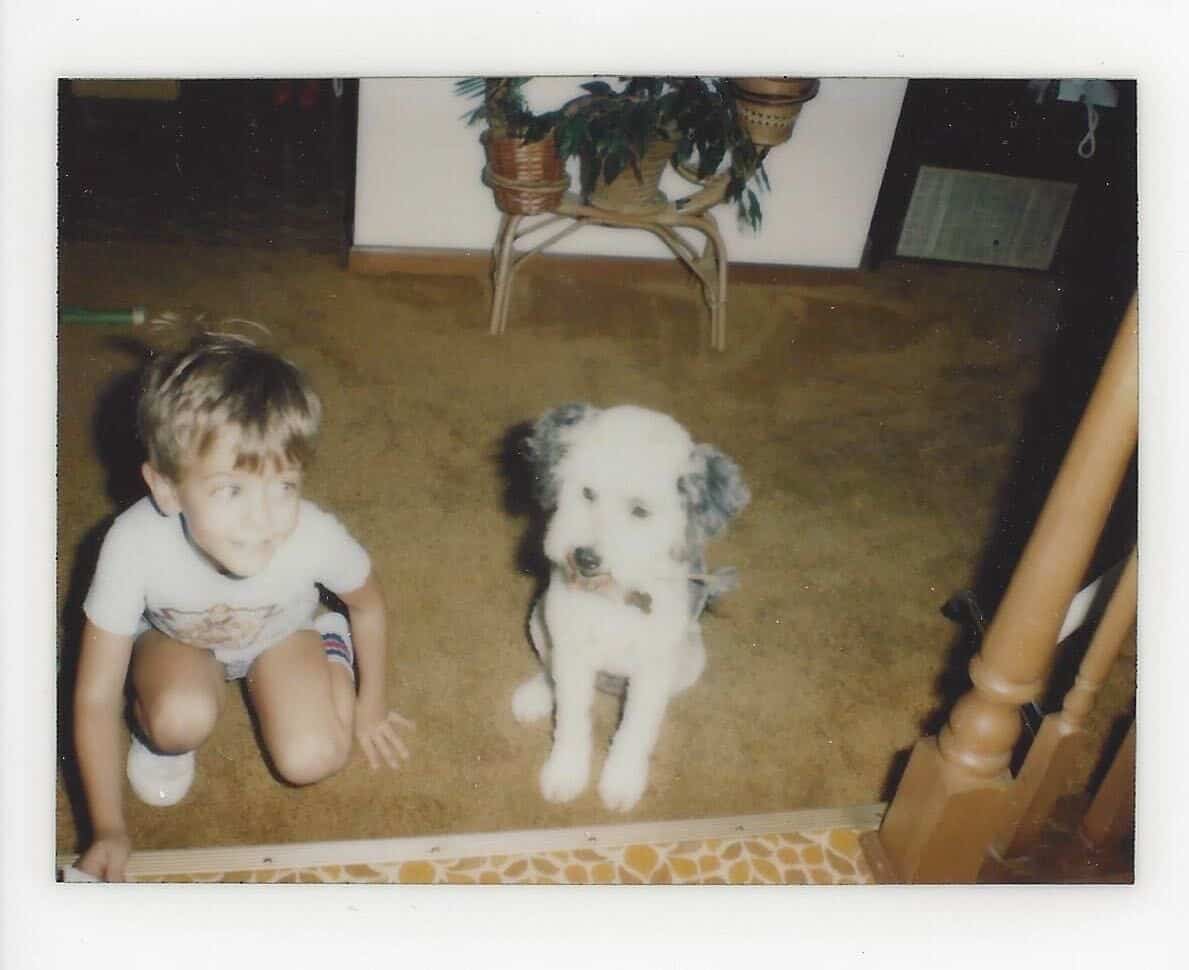
I found it amazing that he could take this dog and slowly hone him into a reasonably obedient dog. Chewbacca also had aggression issues. My dad would come home with torn shirts, which we all found hilarious. Growing up, I was in charge of the family dogs: picking up after them, managing them, and working with them. We always had a multi-dog home, everything from English Setters to Bloodhounds to pound dogs.
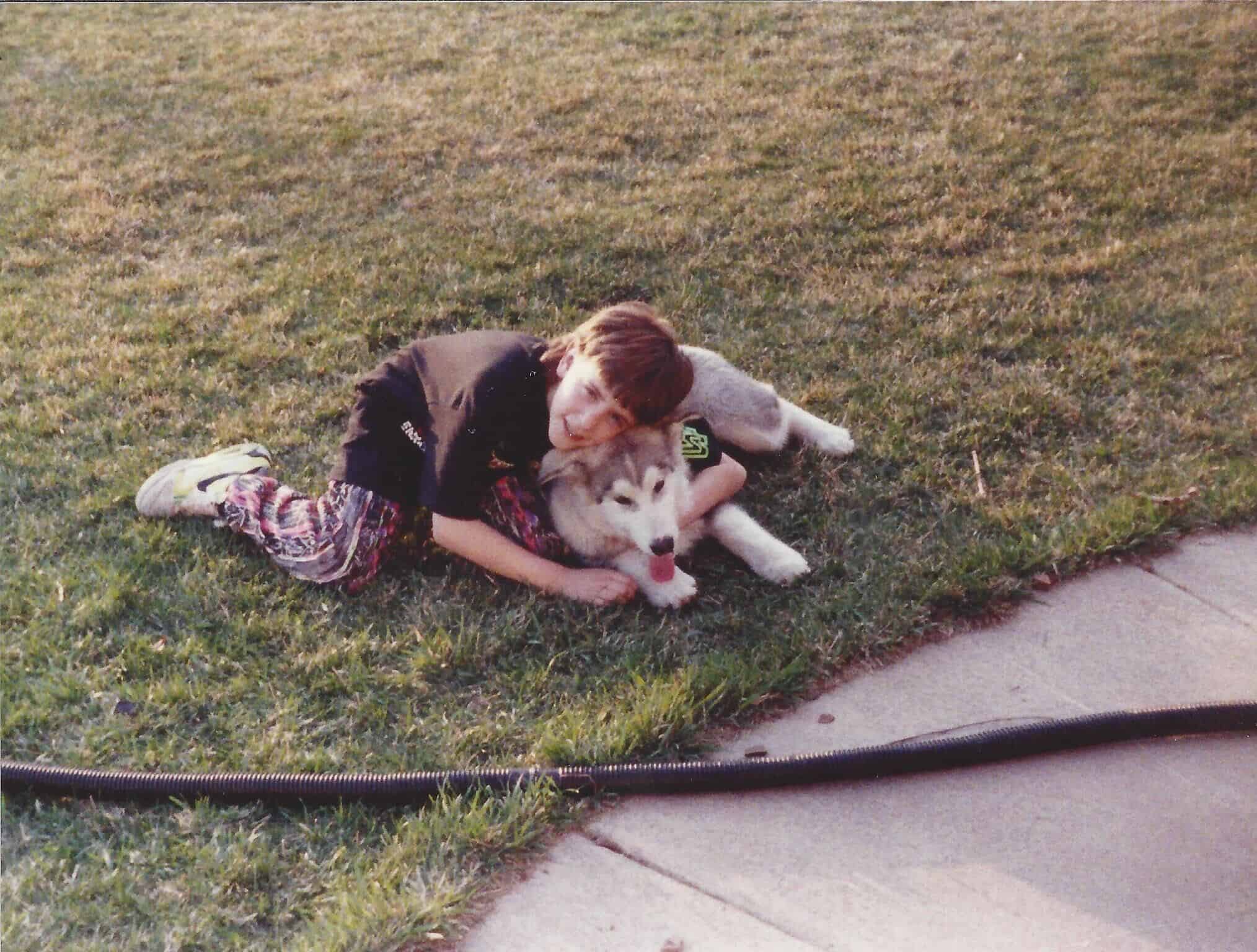
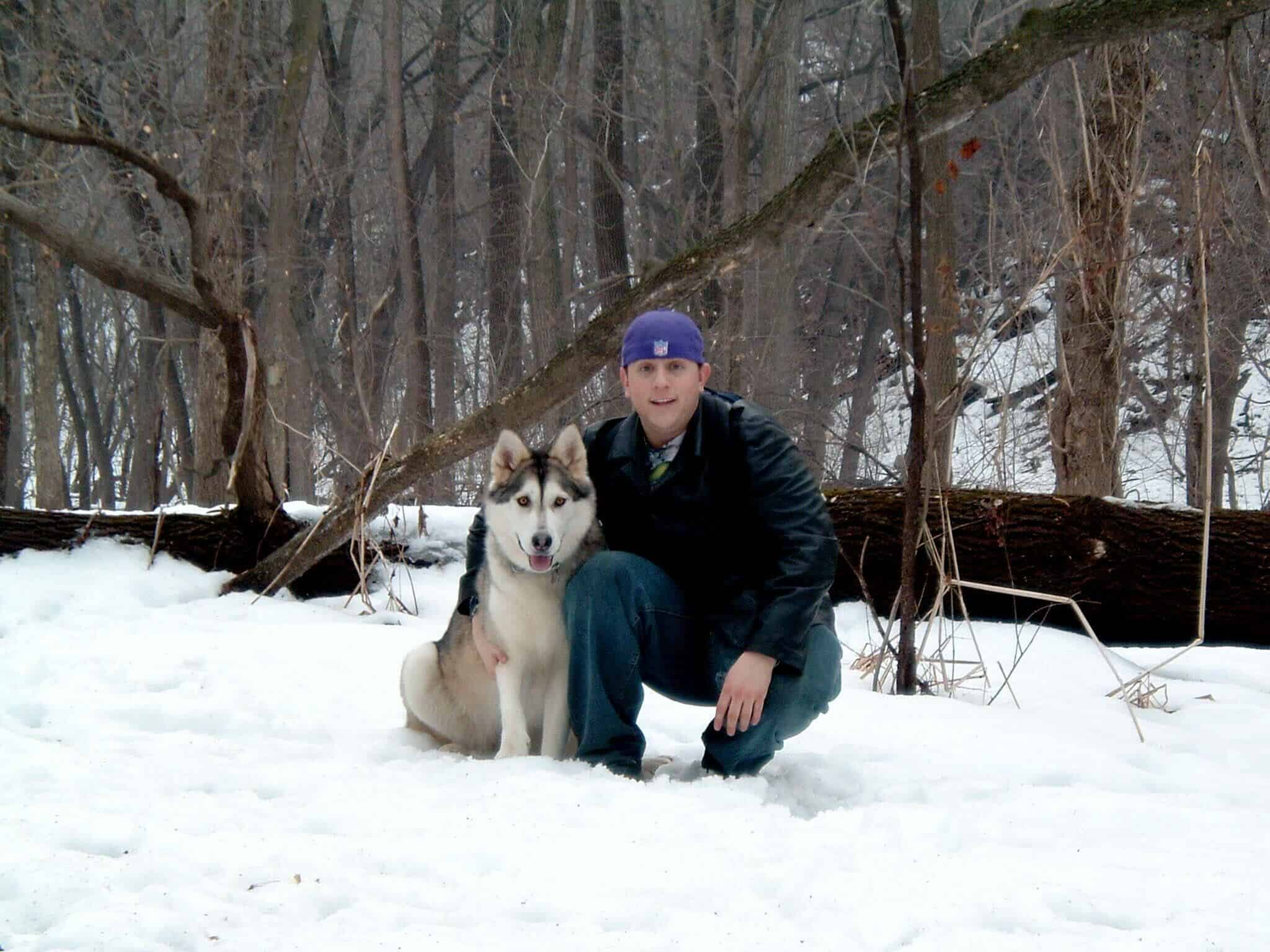
Later we ended up with a house full of Alaskan Malamutes, which are a challenging breed. At one point we had three in the home. I put the dogs in our household through basic obedience.
When I was a kid, neighbors hired me to take care of their dogs when they went on vacation. They paid me a little money, gave me a key, and I would come in, feed, water their dogs and take them for long walks in the neighborhood. Those are some of my earliest memories working with dogs.
Which trainers, authors, or scientists have influenced your approach most?
I am constantly inhaling information. I attend seminars and watch videos, but especially inhale books on dog training. My belief is that the moment you stop learning is when you can really start to decline as a trainer. While not much has changed fundamentally since the days of Pavlov and Skinner, there are so many stylistic approaches, nuances, and evolutions in dog training. I believe in staying up to date.
The trainer with the biggest influence on my professional career is Michael Ellis. I consider him the greatest of all time. We have almost the exact same approach with small stylistic differences. We compete in the same sport and he has been doing it for decades. He is outstanding at articulating complicated training concepts and at communicating with clients who are not dog trainers.
I also follow trainers for specific disciplines. There are experts in police work, search and rescue, and detection. To name a few: Pat Nolan, Tommy Verrueschen, Kevin Bain, Forrest Micke, Stuart Hilliard, Dr. Melanie Uhde from Canine Decoded, Pat Stewart, and Cameron Ford for detection work. The list goes on. The main thing is that I am always evolving and always taking in more information.
Can you explain your dog training philosophy? What is important to you in the process and what does success look like?
A question I constantly ask myself is: Does the dog understand? And am I being fair to the dog based on what they do understand with what I am asking next?
Another key part of my philosophy is that it depends on the dog. Dog training is not a one-size-fits-all product. This isn’t McDonald’s turning out the same burger every day. These are individual beings with different personalities. Anything mass produced in a cookie cutter assembly line, lacks heart and soul; then attention to detail and quality declines. A training system is a good thing but shouldn’t be so rigid to where it can’t be modified for the particular dog with no room for improvisation. There are nuances and approaches I apply depending on the dog. Every dog is different. Even within breeds, one German Shepherd can be completely different from the next. Reading the dog is critical.
Another principle for me is that hurry is the death of good training. I will not rush a dog that needs more time. Success to me is a finished dog who understands everything they have learned and whose issues have been addressed. I want there to be a synergistic communication between dog and handler. It is not about saying the dog completed three weeks so they are done. If it takes a few additional days at no cost to the client, I will do it because I want to stand behind the finished dog.
Success also means that the owner becomes a good handler. Training is not just about the dog. If a dog has poor handlers at home, the dog will get out of tune. They don’t unlearn behaviors, but they need consistency and proper criteria from the humans. So I emphasize training the family as well.
Do you think it is important to involve owners in the training process? If so, how do you do this?
Absolutely. It is not enough to be a good dog trainer. You also have to be a good teacher. I pride myself on being able to articulate complicated dog training concepts in a way clients can digest. I am very good at turning clients into good handlers.
I used to teach music when I was younger. In music school we took pedagogy, where we learned to teach students of all ages and learning backgrounds. That experience helps me tremendously in dog training.
I often use a musical analogy. If I handed someone a violin and said, “Make great music,” it would sound terrible at first. It takes time to get good at something. Dog handling is the same. I hand the client a trained dog and they still need to learn how to handle that dog. Timing, communication, and clarity take practice. If they do the homework and come back in two weeks, they will be able to make some music on that violin. They will have developed handler skills.
Any dog that comes through my program, I am there for the rest of the dog’s life. For certain programs, like the on-leash plus off-leash program, clients get a go-home lesson and two additional lessons they can schedule at any time that never expire. Teaching the client is hugely important.
This is also why I am not a fan of online dog training. A professional can prescribe what to do, but cannot see your handler skills in real time. Human body language issues, timing errors, and communication breakdowns can confuse a dog. You need a professional watching you to correct those things. You simply cannot get that online.
What is one popular myth about dog behavior you wish more owners understood?
When owners say, “The dog is protecting me,” 99.9 percent of the time the dog is not protecting them. A dog is not protecting you unless they have been trained to protect.
What is usually happening is reactivity or insecurity because there is no stable leadership in the household. When owners see growling or aggressive behavior, it is not coming from a confident protective dog. Protection is trained through exposure to scenarios and specific work. This myth often becomes an excuse for behaviors that have been unaddressed for too long and are simply reactivity.
What advice would you give to someone considering a career in dog training?
First, do not get an education in dog training online. I am strongly against it. You can watch a million videos and still be a terrible trainer. You need hands-on experience with hundreds of dogs.
Online training also prevents the instructor from seeing what you are doing in real time. Even over FaceTime, too much is lost. The most important thing is to find a school that lets you put hands on as many different types of dogs as possible and that teaches behavioral modification. There are going to be dangerous dogs out there dealing with fear aggression, territorial aggression, dominance aggression, and more. If you do not have the experience to handle that, you should not be working those cases.
If someone is unsure whether they want to pursue this career, I recommend starting by walking dogs in the neighborhood or taking care of dogs when people are out of town. Dog training is a rugged lifestyle. It is not all cute puppies. There is crate cleaning, getting injured, and dealing with clients. Many people think they will work with dogs and not people, but you must be good with people to be a good trainer.
If someone wants to go further, the next step is to train with a talented professional who has been doing it for a long time, then get a formal education, and beyond that keep learning. Attend seminars, get involved in dog sports, agility, detection, you name it. Always keep learning.
What changes would you like to see in how society approaches dog ownership and training?
I would like to see people treat dogs like dogs. Too many people anthropomorphize dogs and treat them like children. I understand the emotional bond. I love my personal dogs dearly and they are family. However, our bond is extremely strong because I communicate with dogs in their language and treat them as dogs. My dogs are drinking in life and are very happy because I communicate clearly with them in their language.
In the dog training world, I would like to see less dogmatism, particularly from the purely positive and force-free community who tend to demonize balanced trainers. In reality, they are not truly force-free or purely positive. If you watch them work a dog, they use compulsion and other quadrants of operant conditioning whether they recognize it or not. They also do not take on the types of dogs I am willing to take on, such as dogs rotting in shelters or scheduled for euthanasia who simply need a balanced trainer willing to use tools to help them.
Corrections are ubiquitous in the dog world. From birth, puppies receive corrections from their mother for inappropriate behavior. Dogs correct each other constantly. There is a difference between abuse and correction. Balanced training uses all four quadrants of operant conditioning and teaches through desirable and undesirable consequences. It is the same in the human world. If you speed and get a ticket (Positive Punishment P+), that is an undesirable consequence added & you learn to slow down to avoid another speeding ticket. It does not have to be painful to be effective. There’s a removal of something desirable to decrease a particular behavior (Negative Punishment N-). For example, a dog who has their toy taken away because they’re playing too rough; or a human can lose their license to drive if they keep speeding.
Negative Reinforcement (R-) works in similar ways. A dog learns to turn off leash pressure, which gives them agency and allows for clear communication and increasing desirable behaviors. The auto industry does this with seatbelts. You get in, turn the key, the car chimes, and the only way to stop it is to put your seatbelt on to turn off the unpleasant stimulus; thus increasing the likelihood of seatbelt use.
I would like to see less virtue signaling and less demonization of trainers who are out there helping dogs and enabling owners to have good lives with them.
What has provided you with your grounding in dog trainer education?
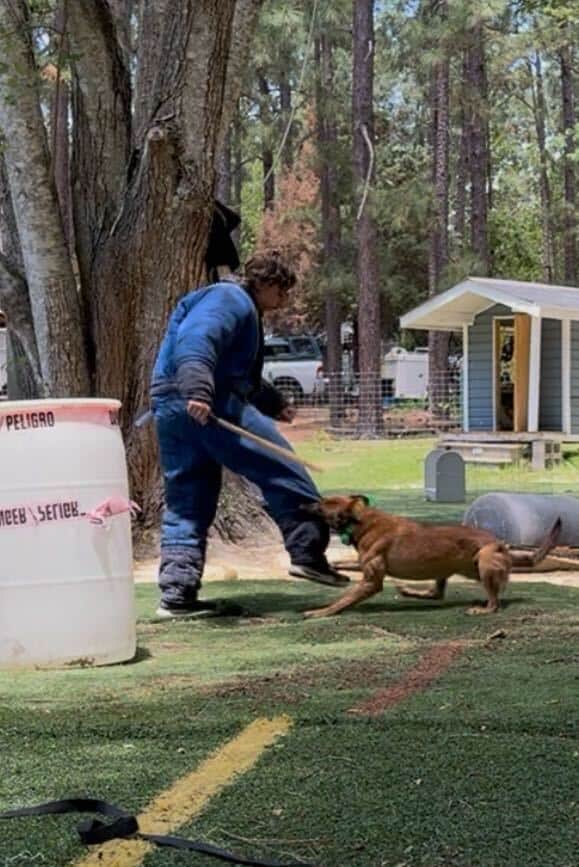
The biggest thing that grounded me in my education is working with hundreds of dogs, especially in the sport world. I compete in one of the hardest dog sports in the world: Mondioring. It is a dog trainer’s sport because of how difficult it is. Pure generalization is almost impossible. You train the dog to do jumps, retrieves, scent discrimination, trailing, and bite work, and then trial the dog in the ring with zero tools on. The dog is completely naked and you cannot even tell your dog no. You give the cue and the dog executes the behavior with precision. Being in that world surrounds you with skilled trainers, and that makes you better.
I also graduated from the International School for Dog Trainers as a Certified Master Dog Trainer with student excellence. I was offered and accepted an internship there after graduating. I am certified in police dogs, service dogs, search and rescue dogs, protection dogs, and detection dogs, and I am well versed in behavioral modification for severe cases. My education continued through decoy workshops and seminars, training under Tommy Verschueren, and training with Kevin Bain, who has been training for a long time. In addition, I’m extremely passionate about Mondio Ring, the sport in which I compete and I train every single day. I never stop learning.